
Chao College Comes to Life
A transformational gift from the Chao family will shape Rice’s 12th residential college, blending modern design with a legacy of generosity.
By Sarah Rufca Nielsen, with reporting from Andrew Bell and Chris Stipes
On a bright September morning last fall, members of the Chao family gathered with Rice leaders to mark the start of something new — and something deeply familiar. As construction cranes framed the southern edge of campus, they joined Rice students, alumni and friends to celebrate the topping out of Chao College, the university’s 12th residential college.
Made possible by a landmark gift from the Chao family foundation, the Ting Tsung and Wei Fong Chao College will bring nearly 300 beds to campus when it opens this fall. Together with its off-campus members, the college will become home to more than 400 Rice students, continuing a family legacy rooted in connection, opportunity and innovation.
“The Chao name embodies the very finest qualities of Rice’s residential college system — leadership, generosity and a profound commitment to building meaningful connections,” said President Reginald DesRoches. “Chao College will stand as a lasting tribute to the entire Chao family, ensuring their legacy continues to inspire and shape generations of Rice students.”
Designed by the internationally renowned Danish architecture firm Henning Larsen, with Houston-based Kirksey as executive architect, the Chao College complex will feature two residential towers — one five stories, the other 10 — linked by green courtyards, social spaces and open-air terraces. Its 3,000-square-foot rooftop terrace will overlook an 11,000-square-foot central quad, creating a vertical village in the heart of the South Colleges where students can live, learn and gather.
As Rice’s first new residential college since McMurtry and Duncan opened in 2009, the addition of Chao College will ensure that every Owl can find not just a place to live, but a community to call home, even as the university increases its enrollment to 5,200 undergraduates by 2028.
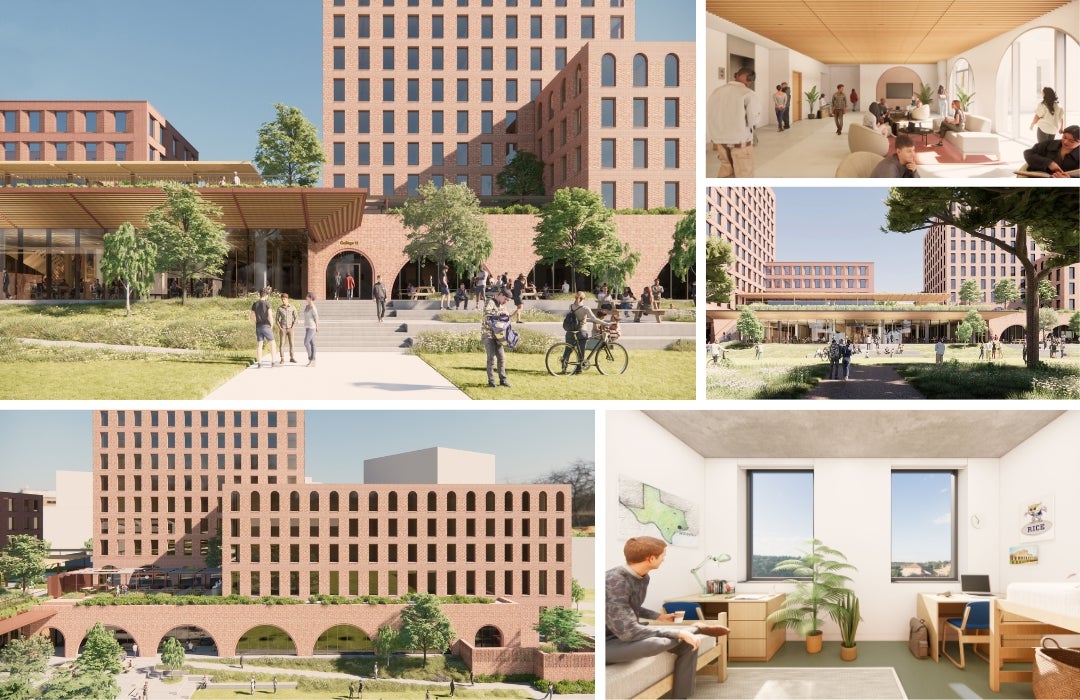
At once contemporary and contextual, the design reflects Rice’s growing focus on sustainability and human-centered design. The project targets LEED Gold certification and includes solar panels, rainwater capture systems and bird-friendly materials.
“Rice’s residential colleges are where students find their home, build friendships that last a lifetime, and learn how to lead and serve others,” said Dean of Undergraduates Bridget Gorman. “The Chao family’s gift ensures that as Rice grows, we continue to provide this transformational experience for every undergraduate student.”
For the Chao family — Houston business leaders and philanthropists Dorothy Chao Jenkins, James Chao and Rice Trustee Emeritus Albert Chao — the project is both personal and forward-looking. The late Ting Tsung “T.T.” and Wei Fong Chao built a global enterprise that found new roots in Houston in the 1980s, where their sons went on to found Westlake Corp., now a Fortune 500 company.
Their family’s impact on Rice already runs deep. The Chao Center for Asian Studies, established through a family foundation grant in 2008, has become a nationally recognized hub for scholarship and community engagement. Albert’s wife, Anne Chao, ’05, ’09, who earned both her master’s and doctorate degrees in history from Rice, co-founded the Houston Asian American Archive, housed in the Chao Center and Fondren Library.
“The Chao family is immensely honored to be part of Rice students’ college experience with the establishment of the new Chao College,” said Albert Chao. “We hope it will be an enriching and rewarding experience for Rice students for generations to come.”
Lovett College’s New Home
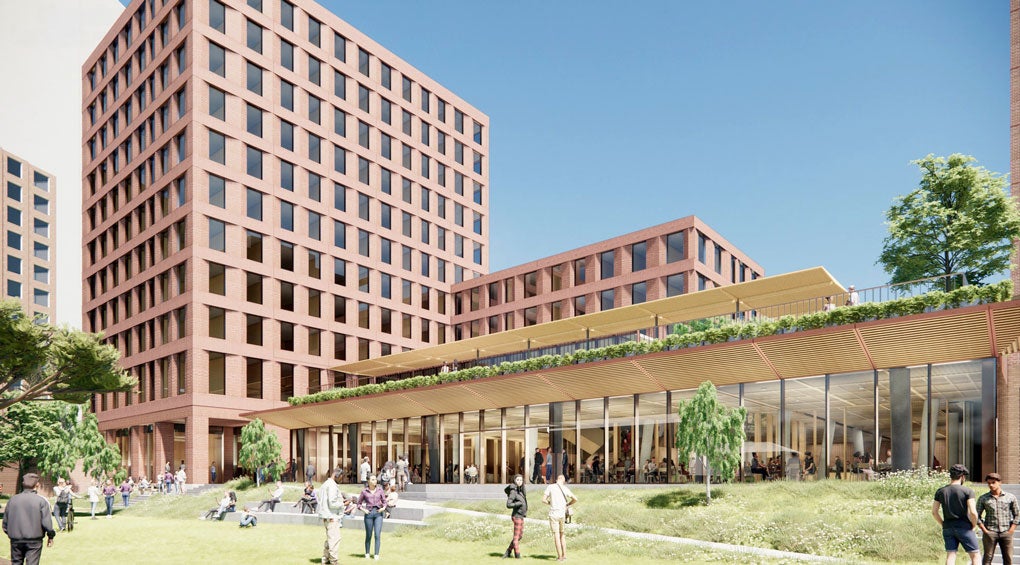
When Lovett College moves into its new 11-story tower in fall 2026, it will be the end of an era — and the beginning of another. The original Lovett building — affectionately referred to as “the toaster” for the way light glows through its perforated exoskeleton — has been a recognizable example of brutalist architecture on campus since the 1960s. Its successor will bring the college’s traditions and community into a new, sustainable home on the site of the former Sid Richardson College, adjacent to Chao College.
Designed by Henning Larsen and Houston-based Kirksey, the new Lovett will house just under 300 students and share an all-electric, next-generation servery with Chao College, complete with a robotic cooking station — a first for Rice. Outdoor gathering spaces, including a rooftop pickleball court, will add new layers of community and recreation to the South Colleges.
“These new colleges won’t just add buildings to our campus — they’ll create new homes for our students, homes that will shape friendships, traditions and memories for future Owls,” said President Reginald DesRoches.
From the Winter 2026 issue of Rice Magazine
Body