
Way, Way Beyond the Hedges
How ROPE creates accessible adventures where students can venture farther than expected.
By Autumn Horne ’22
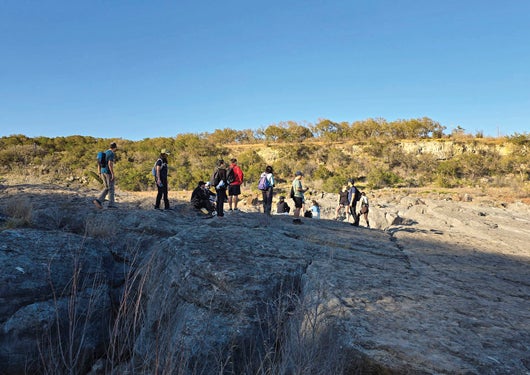
On a cool Sunday morning in February, a group of students are threading along a tree-lined trail in Pedernales Falls State Park, tucked into the bucolic folds of the Texas Hill Country about an hour west of Austin. Backpacks shift. Water bottles pop open. A laugh carries up the hill toward me as I walk near the front of the pack. After about an hour of hiking, we reach a natural spring bubbling up through the Texas limestone — one of many small discoveries our group has made over the weekend.
The day before, we hiked to the park’s namesake falls, spilling over a vast limestone expanse that we explored until sundown. Later, as dusk settled in, we learned how to pitch a tent and inflate a sleeping pad with a pump sack. “It works best if you blow into the bag from further away,” trip leader Kate Miller ’28 explained with a grin, “because of Bernoulli’s principle.”
Our trip was one of many each year organized by Rice Outdoor Programs and Education, known as ROPE. At our pre-trip meeting, participants shared their reasons for signing up. Some needed a mental break from classes or research. Others were new to Texas and wanted to explore more of its natural beauty with friends or partners. And most did not have extensive experience with camping or hiking.
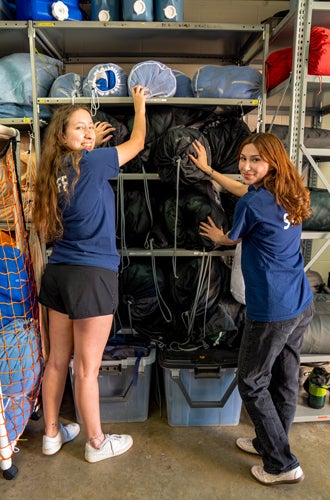
ROPE trips are designed to make the outdoors accessible to Rice students, faculty and staff. Almost all excursions are open to beginners, and gear is provided so participants do not have to invest in expensive equipment. Revenue from gear rentals, another ROPE service for Rice community members, helps offset costs and keeps trips affordable.
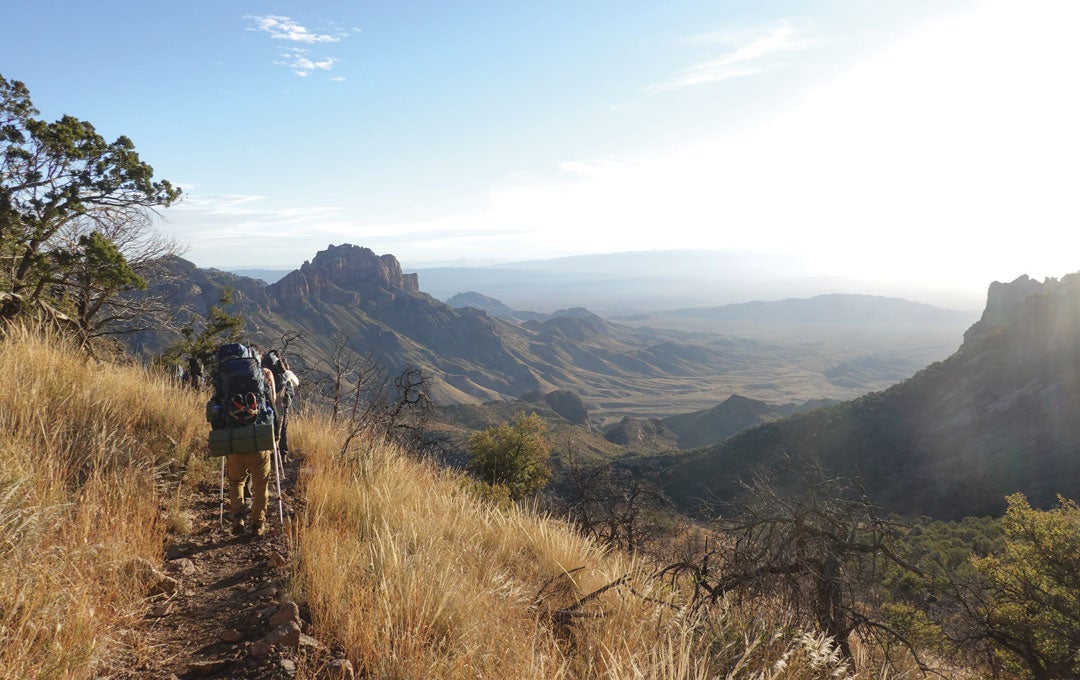
When Kris Cortez, who has led ROPE for 11 years, arrived at Rice, the program was offering a handful of trips each semester. Today, ROPE offers multiple trips almost every weekend and during academic breaks, from hiking day trips and weekend excursions to kayaking along the Gulf Coast to bucket-list trips to Big Bend and the Grand Canyon. It’s still not enough to keep up with the demand from students. “At an urban school like Rice,” Cortez explains, “if we’re not here, there’s a lot less students getting off campus and trying outdoor adventure.”
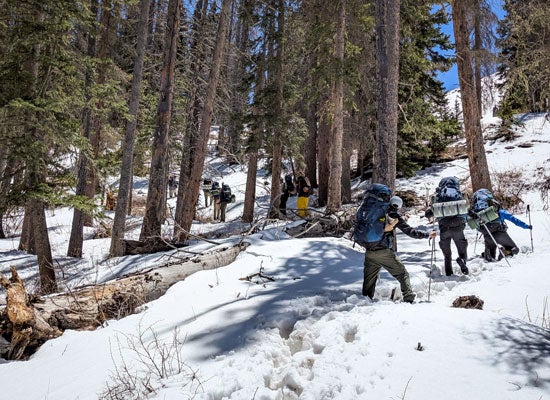
Behind each trip is a team of nearly 20 student leaders who plan and facilitate every detail. Cortez provides guidance, especially on risk management, but leaders are responsible for designing routes, facilitating transportation and meals, and deciding how they will build in time for reflection and connection once they are on the trail.
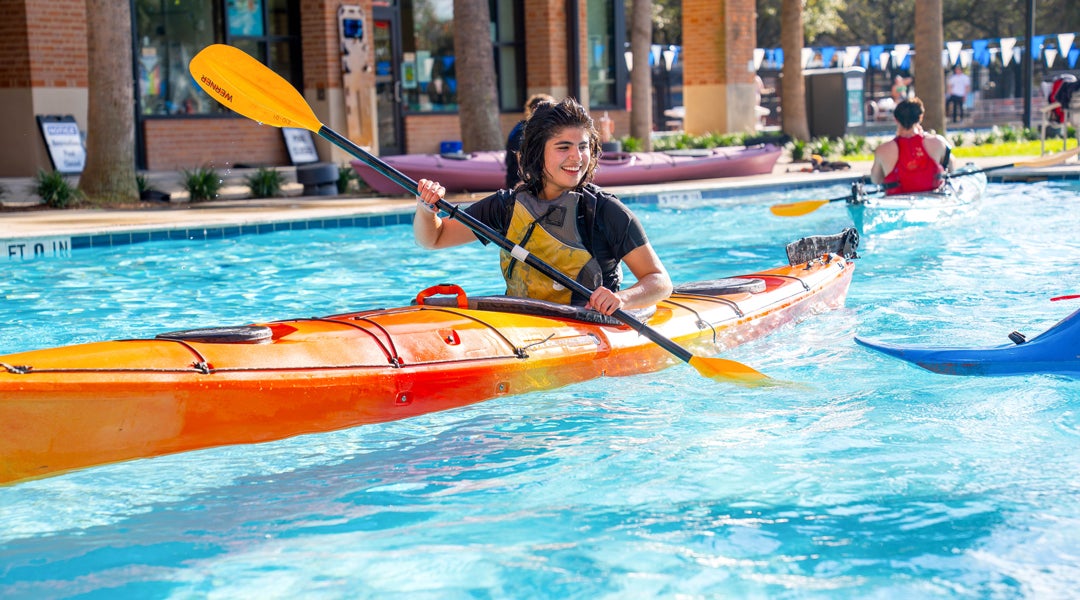
Many leaders were drawn to ROPE because they had previous outdoor experience, but it’s not a prerequisite. Regardless of background, leaders train over long weekends and breaks. They practice kayaking techniques in the Rec Center pool, study Leave No Trace principles and complete wilderness first aid certifications. Technical competence is emphasized because leaders are responsible for the safety of participants, but every leader I talked with said that these are not the program’s most important lessons. Those emerge in less predictable conditions.
Our Pedernales Falls trip was well outfitted with sturdy tents, winter layers and cold-weather sleeping bags. Still, the temperature dropped off sharply after sunset. Lying in my tent trying to read by headlamp, gloved fingers stiff in the cold, I heard my fellow campers admiring the stars. Later, disoriented on a 4 a.m. walk from the bathroom, I was suddenly grateful for the steady sound of a fellow camper’s snores which led me back to our site.
In the small moments of discomfort, I started to understand what trip leader Benjamin Kwait-Gonchar ’27 told me earlier that week, “You can be freezing in some random woods and you’re a little bit miserable, but it brings everybody much closer together.”
Over the course of the weekend, I watched that closeness take shape. A leader slowed their pace to match a first-time hiker. Conversations moved easily between majors, hometowns, research interests and the future. I learned about the process of writing an artist’s manifesto, energy transition in Uzbekistan and that I share remarkably similar taste in novels with a senior electrical engineering major.
“One day of backpacking together feels like weeks of knowing someone outside the wilderness,” trip leader Justin Impelman ’27 says.
What felt organic was, in fact, intentional. ROPE leaders have real responsibility to make decisions under pressure, cultivate appreciation for the outdoors and build community. For William Clarke ’28, that responsibility has been central to his personal development. “When you’re in charge of people’s safety,” he says, “it’s almost like you don’t have a choice but to be a leader.” In addition to safety, leaders are responsible for building in pauses to appreciate nature — time to explore limestone formations, linger at an overlook or sit quietly under the night sky. For Aidan Allen-Lyons ’26, a trip leader pursuing environmental law, these moments matter. “A huge part of our job at ROPE is to expose people to nature in a way that they want to protect it,” she says.
We returned to campus with phone notifications buzzing and inboxes filled, but before we departed, we gathered in a circle and shared what we were taking away from the trip: the pleasure of disconnecting from technology, stronger friendships, confidence setting up a campsite. We also carried back a reminder to look around, look out for one another and shoulder a little more responsibility than we arrived with.
From the Spring 2026 issue of Rice Magazine