
Prairie Revival
A detention basin becomes a living laboratory as Rice students restore one of Texas’ most endangered ecosystems.
By Rachel Leeson
When the current Wiess College building was built on the southern edge of the residential college corridor, Rice turned the neighboring green space into a detention basin to capture water runoff. While necessary, this wasn’t an easy decision: As the campus’s last uncultivated green space, it was valued by community members seeking or studying nature.
“We had this incredible, student-led push to take this area and turn it into a historic coastal prairie, a highly endangered ecosystem native to the Houston area,” says Cassidy Johnson, director of Rice’s arboretum and assistant teaching professor of biosciences.
Thus, in 2018, the Harris Gully Natural Area was born. When the first efforts to reseed it failed, Mia Peeples ’22 led a multiyear soil testing project that determined the top four inches of soil were too tightly compacted for native plants. Cover crops including daikon radishes, legumes and canola were planted to break up the soil and improve its quality.
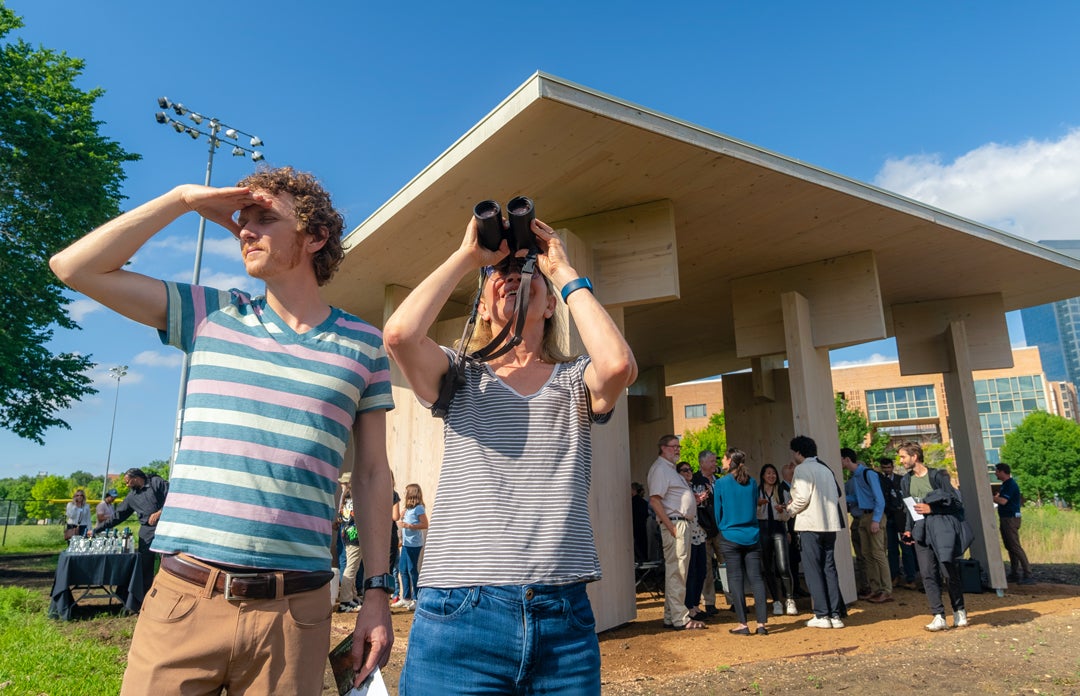
In 2023, the detention basin itself was turned into a pond that would serve as a wetland, a common feature of coastal prairies, and planted with cover crops. Earlier this spring, the cover crop was removed from the pond’s banks and native wetland grasses were planted instead. The inner prairie will be reseeded in fall 2026 or 2027.
In 2023, a shaded pavilion designed by Rice Architecture associate professor Jesús Vassallo’s wood seminar class was installed on the site, hosting birdwatchers, open-air classes and other members of the community looking for a natural respite.
That’s the point of Harris Gully’s slow, patient return to a native ecosystem. It’s a place to see what this land was like before Houston, before Rice, before the allées of oaks that shade the campus.
It’s a more subtle kind of natural beauty than the azaleas that coat the campus in pink every spring, but for those who stop and look, it is there in abundance.
From the Spring 2026 issue of Rice Magazine
Body