
An Owl in Office
Glenn Youngkin, the Rice-educated former governor of Virginia, reflects on ambition, accountability and the weight of public service.
Interview by Jeff Falk, introduction and editing by Sarah Rufca Nielsen
Before he was governor of Virginia, Glenn Youngkin ’90 was a Rice student balancing engineering problem sets with basketball practice. The Virginia Beach native went on to build a career in finance, eventually rising to co-CEO of the Carlyle Group. His support of Rice has included serving on the board managing Rice’s endowment as well as significant philanthropy, recognized by the Tudor Fieldhouse training complex that bears his name.
In 2021, he carried his private-sector résumé into politics, becoming the first Virginia Republican elected to statewide office in over a decade. As governor, Youngkin issued tax cuts and regulatory reform, bringing billions in capital investment to the Commonwealth. His sweeping policy changes in K-12 education made it one of the most defining— and contentious — issues of his tenure, while he also made headlines for his efforts to significantly reshape the state’s public universities, notably the University of Virginia’s governing board.
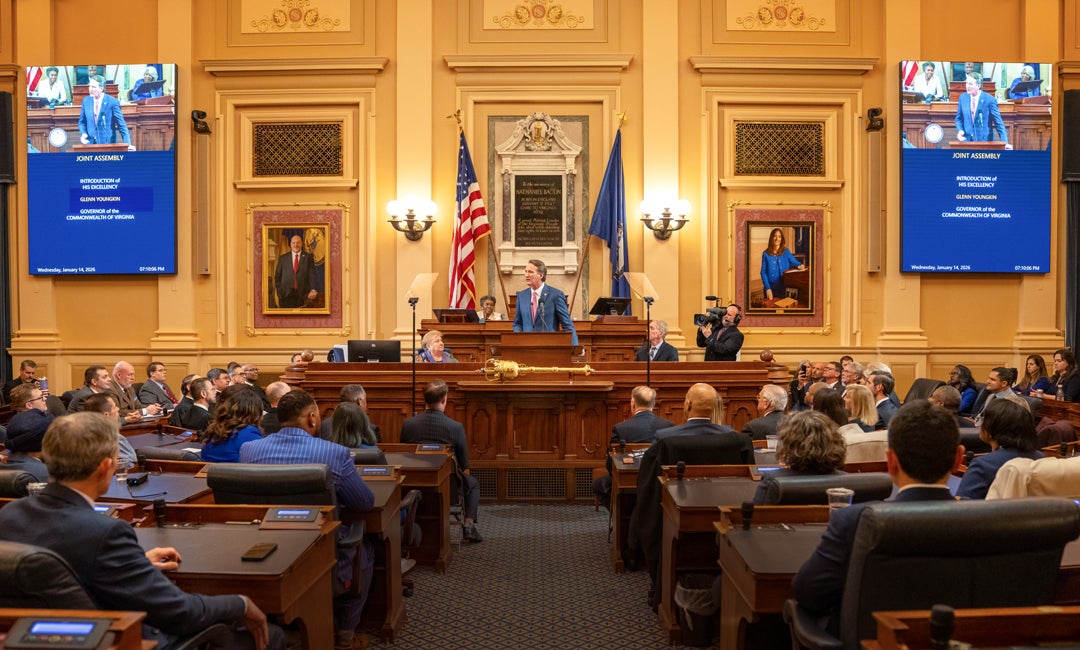
In January 2026, during his final week as governor, Youngkin spoke with Jeff Falk, assistant vice president for strategic communications in the Office of Public Affairs at Rice, about his years as an Owl and how the lessons he learned as an undergraduate carried through his career and his leadership in office.
What instantly comes to mind when you think about your experience at Rice?
I loved my time at Rice. I was a varsity basketball player and a mechanical engineering and managerial studies major, so I was busy. Many of my most vivid memories are being in Fondren Library, sitting in front of those big windows, cranking through calculus sets.
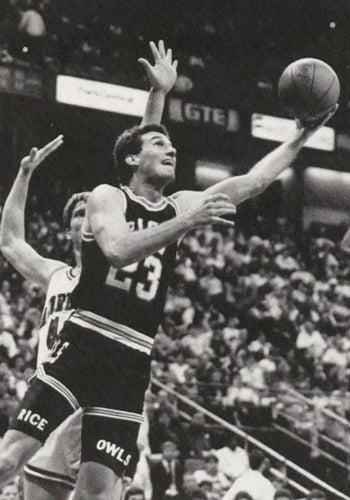
I also viscerally remember our home basketball games. In those days we were in the Southwest Conference, so we were playing [the University of Houston’s] Phi Slama Jama, the University of Texas, SMU, A&M and Arkansas, which was ranked No. 1 in the country. Autry Court, which is now Tudor Fieldhouse, was just rocking.
So you’re a double major, a standout forward — a lot going on. Looking back, how did you balance all that?
Let me begin with — you’re very kind to call me a standout. I was good at my role, which was to be on the bench. I was not quite a standout. And as you said, we were busy. I had a huge academic load that I was carrying and a more than full-time job of practice and traveling and all of the things that come with being a Division I athlete.
And I have to say, I learned how to work hard, how to manage my time, and I very much learned the power of friendships. There were two other guys on the team who were going through the mechanical engineering curriculum with me, and the three of us did everything together.
What professors or classes were particularly formative for you?
My favorite professor, without a doubt, was Alan Chapman. He was a thermodynamics professor and the Rice faculty adviser to the NCAA, so he loved sports and understood Division I college athletics. He designed spacesuits for NASA, and it was just so awesome to hear his stories about all of the early NASA missions. I will always be deeply grateful for the interest that he took in me — as a college athlete but even more so as an engineer.
And, of course, we all loved [Gilbert Cuthbertson, popularly known as] Doc C. He was a resident associate at Will Rice College, and nothing was better than sitting around in the evenings shooting the breeze with him.
Talk about coming from business, being co-CEO, and then all of a sudden you have to navigate a divided government.
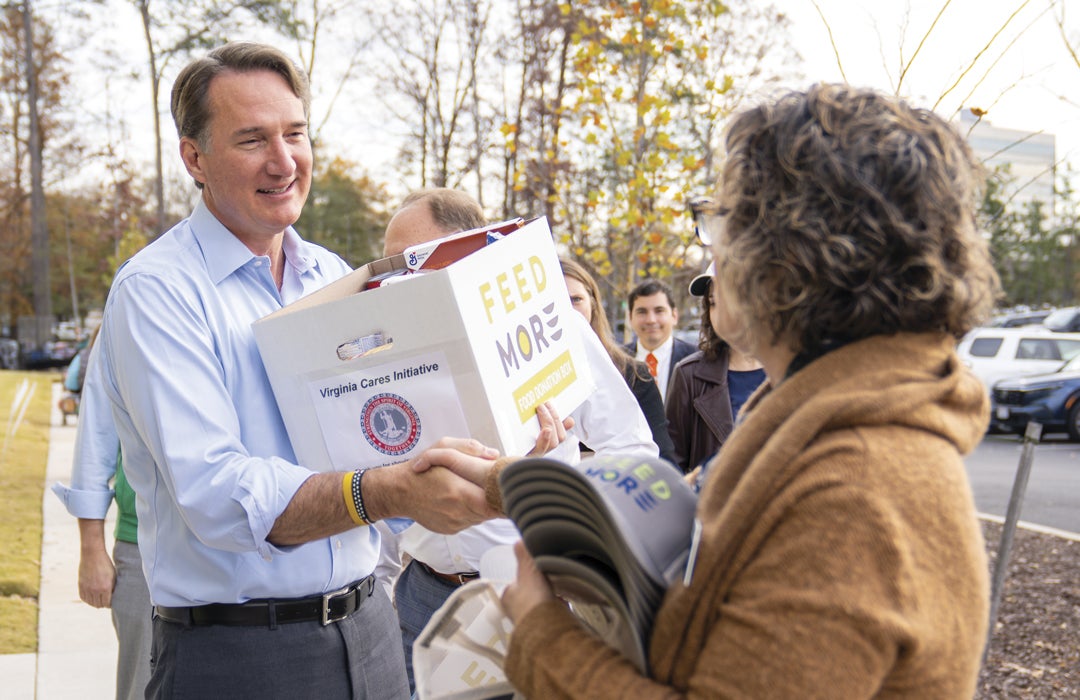
Virginia is a divided state politically; we’re very purple. The general assembly has always had Democrat control in either one house or both while I’ve been governor. And yet, we’ve been able to achieve an extraordinary amount. And I think that’s because I firmly believe that common sense leads the way, and when we’re able to agree on what the problem is then we can get to the work of solving it.
That’s why it was so important for us to establish upfront that economic growth and job growth was foundational to the future of the Commonwealth, and therefore we needed to deregulate, to invest in shovel-ready sites and workforce development, and to recruit companies. And guess what? Record job growth and record economic development.
Did anything about the job of governor surprise you?
Two big surprises: Number one, how much you can get done, even in divided government. It does require a relentless pursuit of results. You can’t be distracted by thinking that activity is the objective. You can tackle economic growth, education, mental health, broaden Medicare, and make sure you take care of God’s gifts to the Commonwealth, our rivers and streams and bays. We can make government work more effectively and fix our DMV and our Virginia Employment Commission. We can lead the nation in providing a parent choice model. And we can reduce maternal mortality rates and have healthy moms and healthy babies. You can do it all. You just have to have a relentless pursuit.
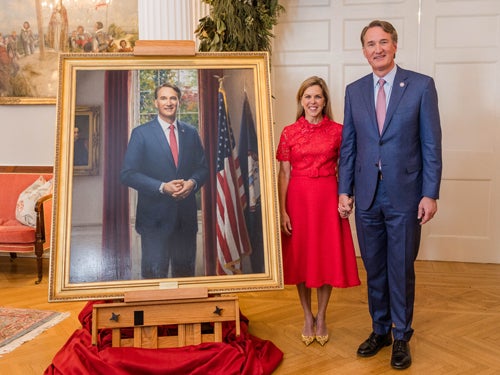
And my second big realization is how much I have loved working with my wife, Suzanne, who has been an amazing first lady. She’s led our initiatives to reduce fentanyl overdoses, where we led the nation. And so, to see how much we can get done, and to be able to do it with the love of your life, has been an amazing experience.
Education has been a big part of your focus in office. How would you describe your views of higher ed and why it matters to our country?
We have to recognize the role higher education plays in our future — to educate the next generation of leaders so that we can match great skills and capabilities with great opportunities and challenges. And our institutions have to rise to that challenge.
What that means is that first, we have to have educational institutions that foster skill development that is dynamic and evolving to meet tomorrow’s needs. Second, public institutions need to be accessible and affordable. That’s why I worked so hard to keep tuition flat in my term, or at least at a very low tuition increase. And finally, the environment has to be safe, open and fair, and that means freedom of speech has to be upheld and championed, and that upholding Title IX and civil rights protections has to be foundational.
And finally, since this is your last week in office, are you ready to talk about any plans for the future?
I believe the job of an elected leader is to do the job that they are elected to do now. So I will finish strong this week, and then I’m going to take my wife on vacation.
This interview has been condensed and edited for length and clarity.
From the Spring 2026 issue of Rice Magazine