
From Lab to Launch
At Rice, a good idea rarely stays in the lab for long. Discover the vibrant ecosystem where inquiry becomes invention, venture and impact.
By Sarah Rufca Nielsen
At Rice, students are not just thinking big. They are building companies, designing tools and taking on problems that resist easy answers. The university has built more than a culture of inquiry; it has created the infrastructure to help ideas go somewhere.
“Undergraduate research gives students a chance to move beyond mastering what is already known and begin exploring what is not,” says David Sholl, Rice’s executive vice president for research. “More than 70% of Rice students graduate with research experience, building skills like confidence, creativity and persistence that serve them well no matter where they go next.”
A concept that begins in the classroom or the lab can be prototyped in the engineering design studio, gain traction in a startup accelerator, be strengthened through mentorship and connections at the Ion, tested in high-stakes competitions and supported with specialized resources to make a real-world impact. What follows is a guide to the programs that make this matrix work: less of a map with clearly defined paths and more of a directory of how ideas at Rice can grow and move. Organized into five hubs, we’re highlighting the role each one plays, the opportunities each creates, and some of the most promising projects and companies to emerge from this growing innovation ecosystem.
Programs represented throughout Rice’s undergraduate research ecosystem:

Oshman |

Summer |

HQ |

Rice |

Innovations |

Launch |
Mentors and Makerspace: Oshman Engineering Design Kitchen
The Oshman Engineering Design Kitchen is Rice’s hub for undergraduate engineering innovation, giving students from all academic disciplines the tools, space and mentorship to design, prototype and test solutions to real problems. Through OEDK, students can take advantage of hands-on fabrication workshops and summer programs in which teams develop innovative solutions for community and client-based projects both at Rice and abroad, making it a key bridge between classroom learning, research and entrepreneurship.
The Serious Science Fair: Huff OEDK Engineering Design Showcase
This showcase is Rice engineering’s annual big reveal: a chance for student teams to show off the prototypes they’ve spent months building. Because many of these projects are backed by industry or community partners, the event is more than a public-facing class final — it’s a chance to get student work in front of sponsors, judges, alumni and the industry leaders who might help carry it into the real world.
Dialysafe
An independent OEDK project from Jaehyun Nam ’26, DialySafe’s noninvasive magnetic biosensing system is designed to detect early signs of infection for patients using peritoneal dialysis at home. By catching problems before symptoms become obvious, the technology could reduce complications, hospitalizations and disruptions to a therapy many patients rely on.
|
|
|
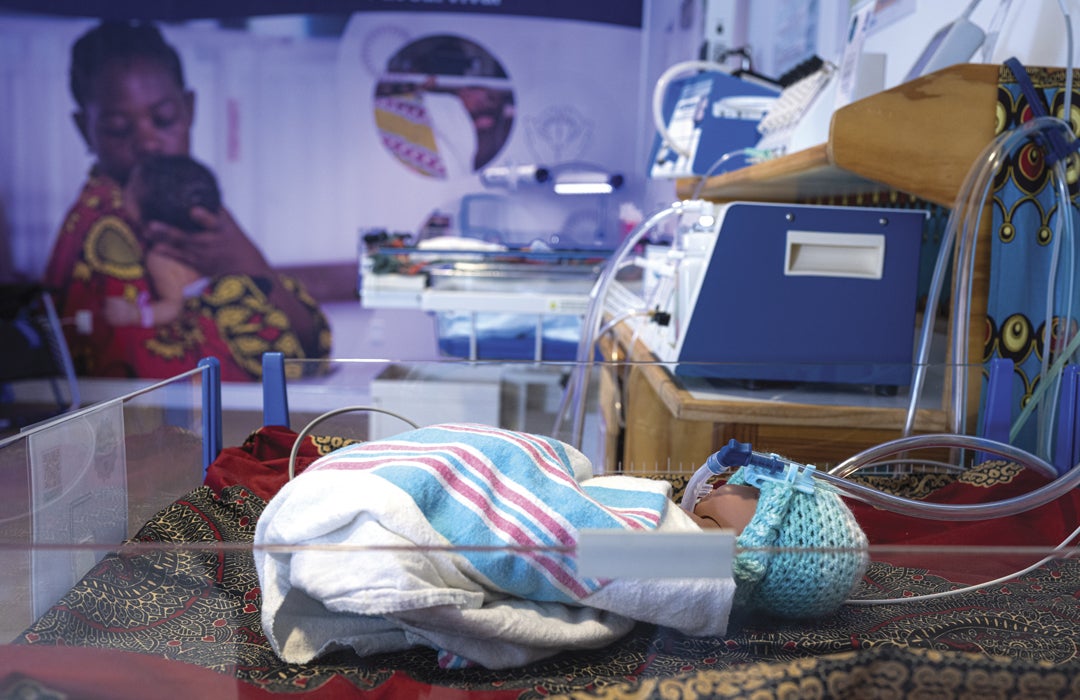
Pumani bubbleCPAP
Designed specifically for low-resource hospitals, the Pumani bubbleCPAP gives breathing support to babies experiencing respiratory distress. It began with a prototype created in the OEDK by five undergraduate students in 2010 and was developed by the Rice360 Institute for Global Health Technologies and its partners into a clinically approved medical device. With a cost about 15 times less than a traditional CPAP, the Pumani bubbleCPAP has been recognized by the Million Lives Collective for its health impacts on over a million babies across 35 countries.
|
|
ApolloBVM
ApolloBVM began in 2018 as the senior design project “Take a Breather” and became one of the university’s most visible real-world engineering responses during COVID-19: a bag valve mask automation device created as an emergency bridge when full ventilators were scarce. In addition to winning two major awards at the engineering showcase, an enhanced manufacturer-built version later received FDA Emergency Use Authorization, and the device’s open-source plans were downloaded around the world.
|
From Curiosity to Discovery: Office of Undergraduate Research and Inquiry
OURI is Rice’s central hub for helping undergraduates move from curiosity to serious research, supporting students through fellowships, workshops, mentor databases, research fairs and presentation opportunities. Just as importantly, it works with faculty to build more inquiry-rich courses and classroom experiences, making research a central part of the university’s academic culture.
The Cream of the Crop: Shapiro Showcase
The Shapiro Showcase is Rice’s top stage for undergraduate research — a cross-campus competition that highlights some of the university’s strongest student scholarship and creative work. Faculty-nominated students deliver eight-minute presentations on advanced projects for a panel of judges — less poster session than polished public debut, and a chance for undergraduates to present serious work with clarity, ambition and range.
Writing to Heal
Created by Maya Harpavat ’26, Writing to Heal explored how expressive writing could support the mental health of cancer patients and their caregivers, recognizing that emotional well-being can shape treatment and recovery. Supported by the Elizabeth Lee Moody Undergraduate Research Fellowship in the Humanities and the Arts, Harpavat led a four-week writing workshop at Halo House, which houses cancer patients being treated in the Texas Medical Center, and developed a writing guidebook that’s now in use.
UroFlo
Developed by a team of undergraduate bioengineers, UroFlo is a device designed to improve postoperative urological care and make treatment more effective and less uncomfortable. In 2024, it won the top prize in the National Institutes of Health and VentureWell’s Design by Biomedical Undergraduate Teams Challenge.
|
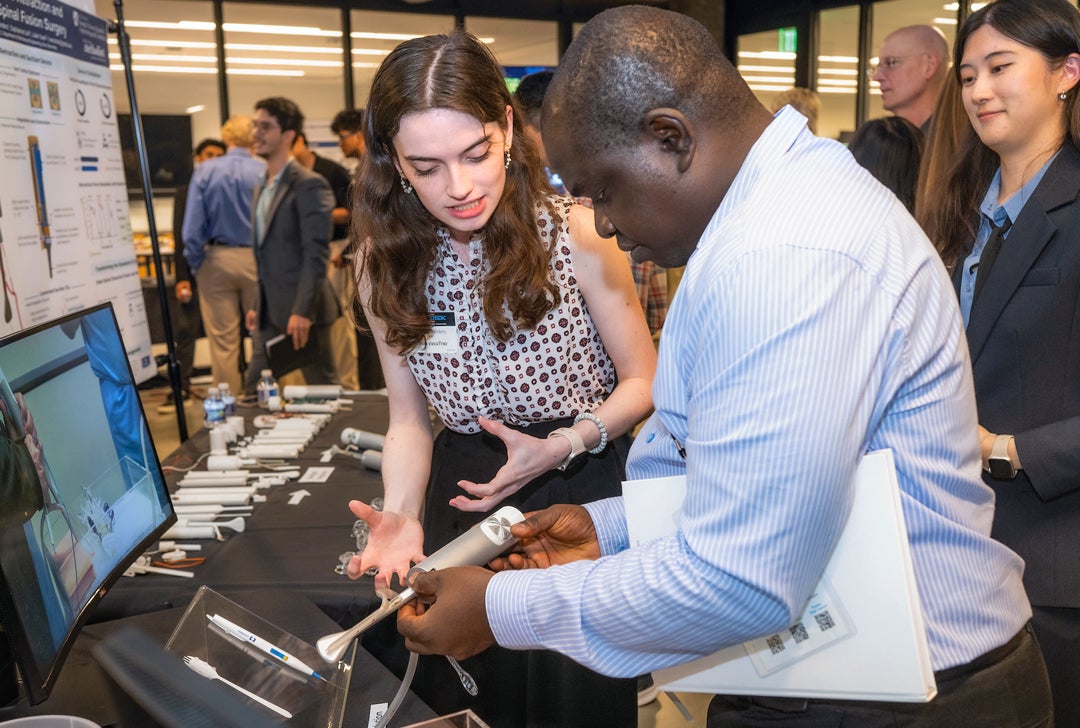
VacuTrac
VacuTrac takes a stubborn surgical bottleneck and treats it like a design problem. The device combines tissue retraction and suction into a single tool for spinal surgery, helping reduce instrument changes, surgeon fatigue and procedure time. The project earned an Honorable Mention at the NIH’s 2025 DEBUT Challenge and was named a finalist in the Collegiate Inventors Competition.
|
The Faculty-Led Foundation: Vertically Integrated Projects
VIPs bring together students at different stages of their college careers to work on long-term research projects, with mentorship from professors and graduate students built into the process. The model allows undergraduate students to join early, deepen their involvement over time and contribute to work with real continuity — a structure that not only enriches their studies, but also gives them a clearer path toward graduate school, research and other professional futures.
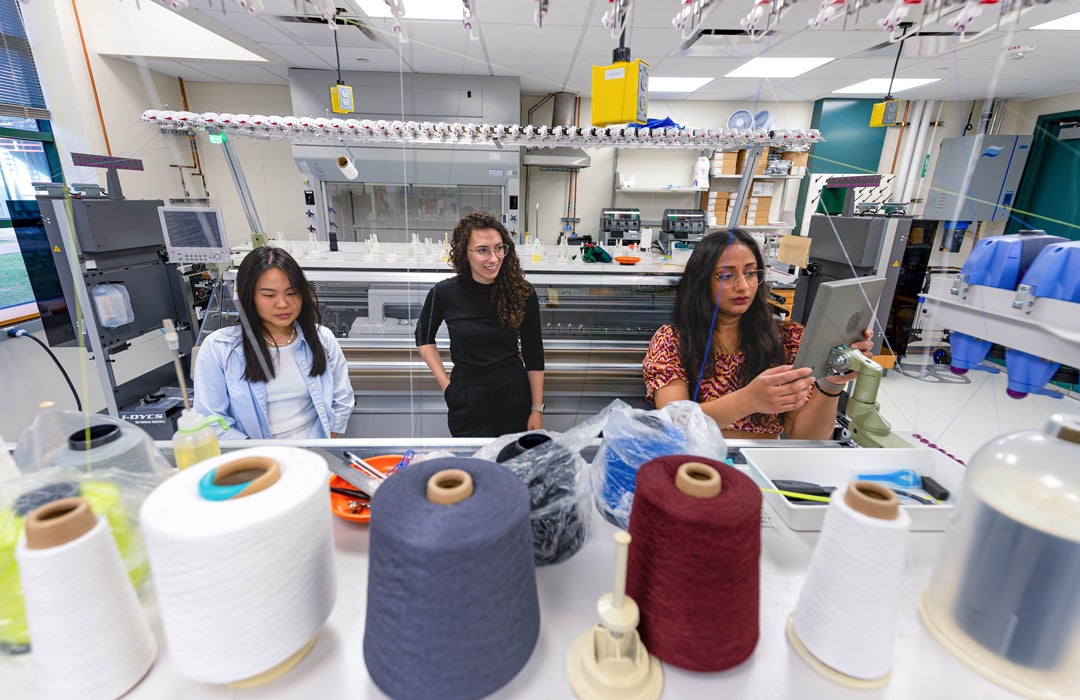
Space Wearables @ Texlab
The Space Wearables project at Texlab explores what it would take to make wearable technology actually work in space. Led by assistant professor of mechanical engineering Vanessa Sanchez, the project develops devices and materials for human spaceflight, with a focus on thermal regulation, mobility, exercise and vital-sign monitoring. Bringing together mechanical design, mechatronics, textiles, soft robotics and computational fabrication, the team is working on systems that can hold up in extreme environments while also being flexible, functional and comfortable enough for people to wear.
Archaeology and Cultural Heritage in Brazoria County
Through archaeological excavation, archival research, mapping and public history work, this VIP team, led by assistant teaching professor of anthropology Molly Morgan, studies Brazoria County sites such as plantations, churches, schools and freedom colonies to better understand the lives of enslaved and post-emancipation Black Texans. The project then turns that research outward, working with families, congregations and heritage groups to make these histories more visible, accessible and meaningful to the public.
Business Ideas in Bloom: Liu Idea Lab for Innovation and Entrepreneurship
Rice’s Liu Idea Lab for Innovation and Entrepreneurship, or Lilie, is the university’s main hub for student entrepreneurship and innovation. Founded in 2015, Lilie was created to strengthen Rice’s startup landscape and help students turn ideas into budding businesses. With a mix of classroom and hands-on programs, Lilie offers everything Rice entrepreneurs need to go from idea to real-world impact.
The Big-Idea Incubator: Innovation Fellows
Lilie’s Rice Innovation Fellows program helps Ph.D. students and postdocs move promising research toward the real world. Launched in 2022, the program supports deep-tech founders as they explore how lab-based discoveries can become viable ventures. Fellows receive equity-free funding, coworking space, tailored mentorship and a year of entrepreneurial training through Lilie. The goal is giving researchers the structure and support to turn high-risk, high-impact ideas into solutions.
HEXAspec
Founded by Ph.D. candidates Chen-Yang Lin ’18 and Tianshu Zhai ’19, ’25 out of the lab of materials science and nanoengineering professor Jun Lou, HEXAspec is developing advanced thermal interface materials that improve heat management for semiconductors, helping data centers cut energy use and water consumption with its proprietary inorganic fillers. HEXAspec was named a U.S. finalist for the MIT Climate and Energy Prize in 2024, won the TEX-E Prize at CERAWeek 2025 and raised $810,000 as of July 2025.
|
|
|
|
Solidec
Solidec is using chemistry to solve one of the biggest climate challenges. Founded by Ryan DuChanois, Yang Xia ’23 and associate professor Haotian Wang, the venture is developing electrolyzer technology that turns captured carbon dioxide and water into useful chemicals using renewable energy. Solidec has earned a spot in Chevron Technology Ventures’ Catalyst Program, won the TEX-E Prize at CERAWeek and received a U.S. Department of Energy voucher as well as raising over $2.1 million as of July 2025.
|
|
|
The Startup Proving Ground: Napier Rice Launch Challenge
Open to Rice undergrads, grad students and MBAs, this annual venture competition gives founders coaching, a big-stage pitch moment and a shot at more than $100,000 in equity-free funding. In other words: pressure, polish and enough momentum to turn a student startup idea into something much bigger.
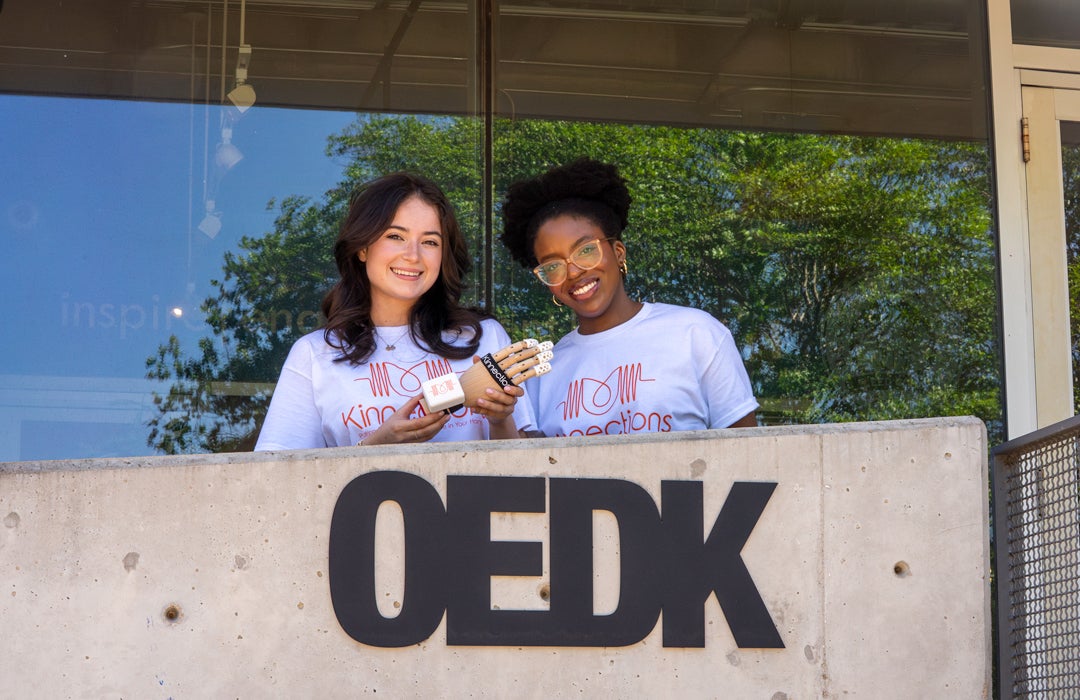
Kinnections
Co-founded by undergrads Emmie Casey ’27 and Tomi Kuye ’26, Kinnections is focused on improving quality of life for people with Parkinson’s via a lightweight glove that uses targeted vibrations to reduce tremors and support motor control. After bringing in $100,000 in preorders, in 2025 Kinnections became the first nonprofit to reach the NRLC championship round, winning both the Outstanding Undergraduate Award and the Social Impact Prize.
|
|
|
The Founder Fast-Track: Summer Venture Studio
The Summer Venture Studio is Lilie’s flagship accelerator: a full-time, 12-week summer program that helps student founders make rapid progress on their ventures. With milestone-driven mentorship, weekly pitch practice and non-dilutive funding, SVS helps students move from prototype to traction in a highly focused, supportive environment.
Labshare
Labs often don’t know exactly what equipment they have, what they need or what nearby teams could share. Founded by Rice students Julian Figueroa Jr. ’25, Mingyo Kang ’26, John Tian ’27, Arnan Bawa ’27 and Daniel Kuo ’27, Labshare combines resource sharing with AI-powered inventory management for research labs.
|
|
|
Veloci
Founded by Rice student-athlete Tyler Strothman ’25, Veloci is redesigning running shoes to reduce foot and leg strain without compromising performance. Veloci quickly moved from idea to serious retail business, becoming the first undergraduate-led venture to win the Napier Rice Launch Challenge in 2025 with nearly $600,000 in revenue.
|
|
|
Haast Autonomous
Founded by Jason Chen ’26, Santiago Brent ’26 and Ege Halac ’27, Haast Autonomous is developing long-range, unmanned vertical takeoff and landing aircraft designed to transport organs, blood and lab samples with tightly controlled pressure, temperature and vibration. The goal is simple: move life-saving medical supplies roof to roof faster, safer and more reliably.
|
|
|
Helix Earth Technologies
Helix Earth grew out of the Dan Preston Lab, where founder and CEO Rawand Rasheed ’24 developed a NASA-originated technology that pulls humidity from the air before cooling, making commercial air conditioning far more efficient. Since then, the company has built steady momentum: It won first place at the 2022 Napier Rice Launch Challenge, earned the inaugural TEX-E Prize at CERAWeek in 2023 and has raised $6.5 million as of May 2025.
|
|
|
RBL With a Cause: Rice Biotech Launch Pad
The Rice Biotech Launch Pad is where promising Rice research starts looking a lot more like real medicine. It works with discoveries coming out of Rice labs — especially in the life sciences — and helps figure out which ones have the best shot at making a difference for patients. Then it helps push those ideas forward through development, testing and the early work needed to move beyond the university.
Motif Neurotech
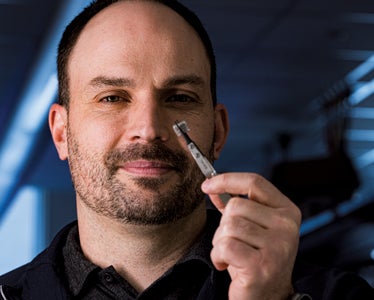
Created through the Rice Biotech Launch Pad, Motif Neurotech is developing minimally invasive devices to treat psychiatric conditions, including treatment-resistant depression, OCD and PTSD. The company, which closed a Series A fundraising round of $18.75 million in 2024, was co-founded by Rice professors Kaiyuan Yang, Sunil Sheth, Sameer Sheth and Jacob Robinson, who also serves as CEO. Its lead technology is the digitally programmable over-brain therapeutic, or DOT, a wireless, battery-free brain stimulator designed to deliver precise neuromodulation without requiring brain surgery.
The Biotech Startup Studio: RBL Ventures
Launched in 2024, RBL LLC takes the strongest technologies from the Launch Pad and builds companies around them. In other words, the Launch Pad creates a pipeline of well-developed Rice technologies, and RBL gives them a clearer path to investors, clinical partners and, ultimately, patients.
SteerBio
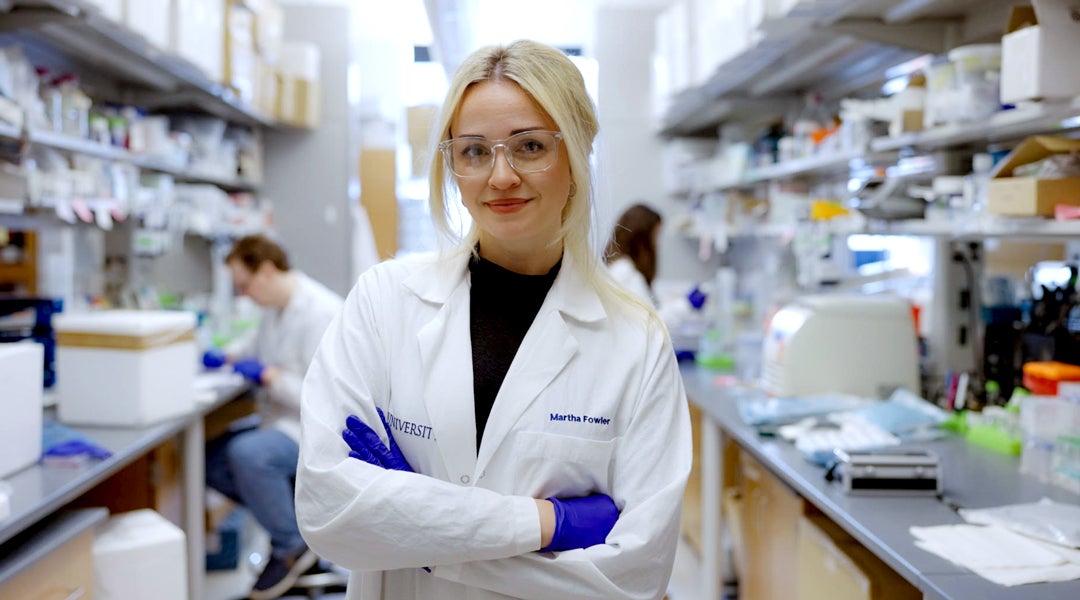
Led by CEO and co-founder Martha Fowler ’25, SteerBio was the first student-led venture accepted into the Biotech Launch Pad incubator before being launched by RBL in March 2026. Based on research from bioengineering professor Omid Veiseh’s lab, the company is developing a one-time implant for patients suffering from pediatric and adult lymphatic disorders, helping the body restore healthy lymphatic function and relieving patients from a lifetime of compression and surgical interventions.
|
|
Where Ideas Meet Investors: Rice Alliance for Technology and Entrepreneurship
Since 2000, the Rice Alliance for Technology and Entrepreneurship has been one of Rice’s clearest expressions of what happens when big ideas get real support. While the Ion is Rice’s physical innovation hub, the Rice Alliance powers much of its programming and activations, connecting entrepreneurs with capital, mentors, customers and programming for founders at every stage. Together, these programs turn research, ambition and good instincts into companies with a shot at lasting impact.
The Big Kahuna: Rice Business Plan Competition
Known as the world’s largest and richest intercollegiate student startup contest, the Rice Business Plan Competition is where student ventures get a market-focused stress test. In 2026, it brought together 42 teams from universities around the world to compete for more than $1.5 million in cash and prizes. But the real value goes beyond the awards: RBPC gives founders direct access to mentors, investors and experienced entrepreneurs.
Rebellion Photonics
Founded in 2009 by Allison Knight ’10 and Robert Kester ’11, Rebellion Photonics developed portable, real-time optical technology for detecting chemical gases and earned second place at the 2010 Rice Business Plan Competition. In 2019, the company was acquired by Honeywell for an undisclosed amount.
|
Pattern Materials
Founded by Alexander Lathem ’24, Lucas Eddy ’23, ’25 and chemistry professor James Tour, Pattern Materials is built around laser-induced graphene technology, a fast, one-step manufacturing process that could make high-performance sensors and medical devices cheaper and easier to produce at scale. Representing Rice at the 2025 Rice Business Plan Competition, it placed fourth and brought home more than $134,500 in prizes.
|
|
Tierra Climate
Tierra Climate, founded by Emma Konet ’24 and Jacob Mansfield ’16, is building a marketplace for verified carbon offsets that helps sellers boost revenue while helping corporate buyers move closer to net-zero goals. The venture placed fourth at the 2023 Rice Business Plan Competition and won major prizes, including the $200,000 Softeq Venture Fund Prize and the $75,000 OWL Investment Prize.
|
|
The Tech Boot Camp: OwlSpark
Open to Rice students, faculty, staff and recent alumni, the 12-week OwlSpark accelerator helped founders turn ideas into viable ventures for over a decade. Though the accelerator hosted its final cohort in 2025, its impact continues through the 104 ventures and 229 founders who participated and the community it helped build—and through the Rice Alliance’s broader platform supporting entrepreneurs at every stage.
Starling Medical
Founded by Drew Hendricks ’19, Sylvie Kalikoff ’19 and CEO Hannah McKenney ’19, neurogenic bladder management company Starling Medical has raised $14.75 million since winning the Texas A&M New Ventures Competition in 2019 and earning a spot at Y Combinator in 2022.
Topl
Founded by Christopher Georgen ’15, James Aman ’11, ’16, ’19 and Kim Raath ’19, ’20, Topl creates blockchain technology that helps companies track and improve how products and materials move through complex supply chains. In 2022, it raised $15 million to advance blockchain that tracks and monetizes corporate ESG initiatives.
The Room Where It Happens: Rice Nexus
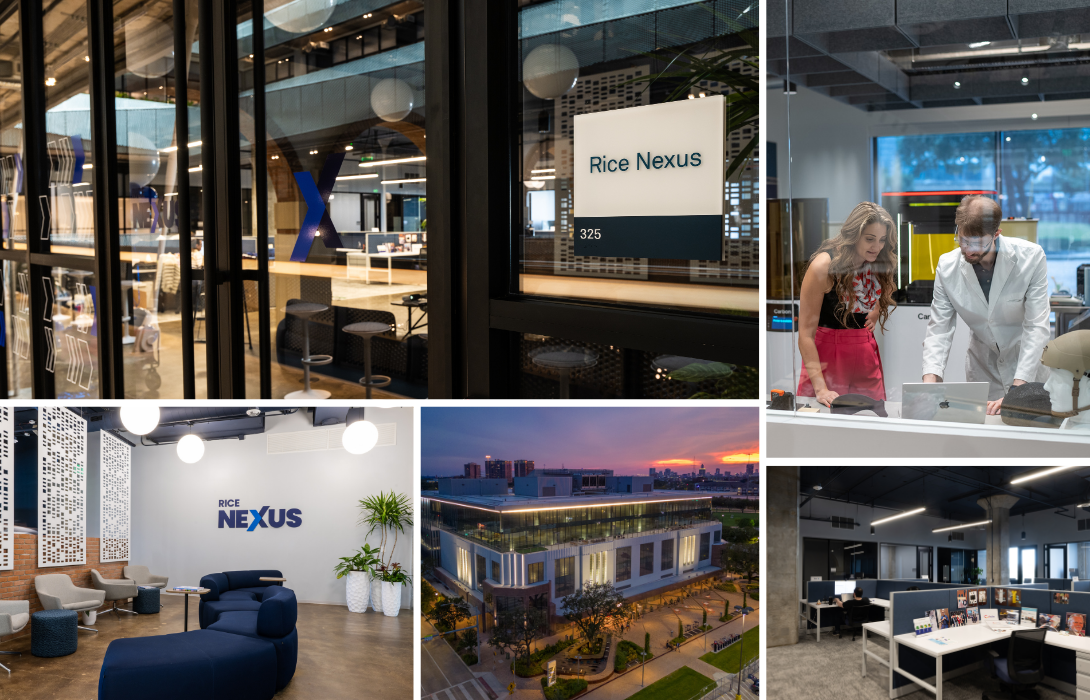
Launched in 2025, Rice Nexus serves as a hub for Rice-founded startups, research-driven ventures and emerging technologies with artificial intelligence at the center of their strategy. Located in a 10,000-square-foot, two-floor space at the Ion, it brings together entrepreneurs, researchers and industry leaders to turn promising ideas into practical, high-impact solutions that advance discovery, growth and meaningful change.
Body