
Syllabus: The Case, Reconsidered
Students spend a semester reinvestigating real-life potential wrongful conviction cases.
By Kat Cosley Trigg
Three students gather around a phone, waiting for it to ring. Laptops and case files are strewn across the table — court transcripts, police reports and witness statements they have spent weeks combing through line by line.
Then the silence breaks. “You have a call from a prisoner at the Texas Department of Criminal Justice.”
The automated voice echoes through the room before continuing with the name they now know well: Jacob Bryan Cobb.
The line opens with a burst of static crackling through the speakerphone. Cobb’s voice fades in and out, a reminder that this is no ordinary phone call. The line is monitored, the connection imperfect.
For senior Jessaly Chavez and freshmen Olivia Brazier and Ariana Gauba, the call has become a weekly routine. The discussion flows easily: Cobb talks about his prison work assignment and earning money for the commissary. He asks the students about their classes and what they have been working on.
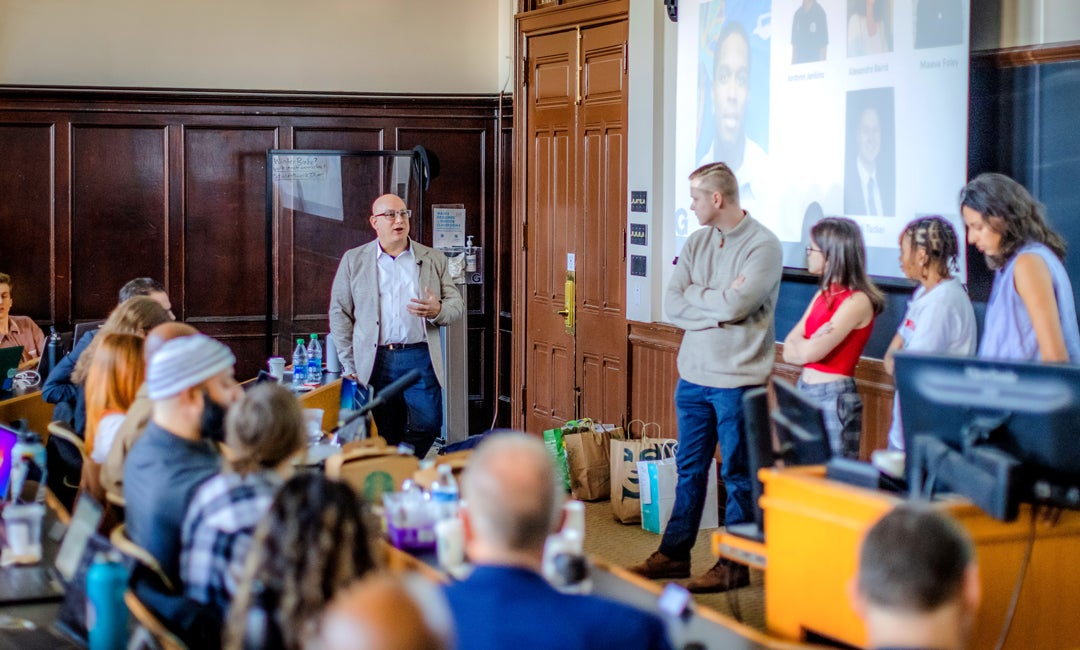
For the Rice students, the call is more than a conversation. It’s part of an investigation. Chavez, Brazier and Gauba are members of one of four teams in Rice’s Making an Exoneree course, where students examine potential wrongful conviction cases in an effort to determine whether someone may have been unjustly imprisoned.
Students spend weeks going through the case files, searching for inconsistencies or details that may have been overlooked. In some instances, students learn crucial details about their cases and program participants by interviewing them in person, as well as speaking to their family and friends. In many of the cases, there is no dramatic new DNA evidence waiting to overturn a conviction and no single smoking gun. Instead, the work requires careful scrutiny of the legal record to determine whether something might have been missed.
Because students are not attorneys, much of their work focuses on advocacy and storytelling that can help bring attention to the cases they investigate. Alongside the investigative work, students also learn the fundamentals of documentary filmmaking, and their research ultimately becomes part of a film designed to bring broader public attention to the case.
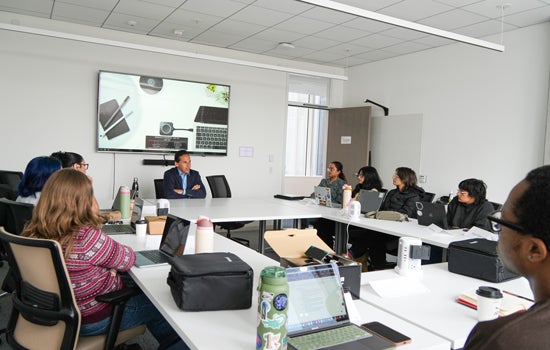
“It wasn’t even something I had to think about. It was a class that I knew I wanted to teach immediately,” says Kavya Padmanabhan, a lecturer in Rice’s sociology department who leads the course. “Sometimes teaching in academia can feel removed from people’s daily lives, and this class is the bridge.”
Cobb was convicted of murdering his grandmother at age 16 and has now spent nearly two decades in prison serving a 40-year sentence. A suicide note was found with his grandmother’s body, but during his case prosecutors argued that he had written it himself. With Cobb eligible for parole in July, if the team can uncover something overlooked in the thousands of pages of records, it could change the course of his life.
“The exciting thing is that the students can create this really convincing and important narrative and hopefully be able to sway the parole officers, [or] at least get a lawyer attached to the case,” says Padmanabhan.
The course is part of a national program of the same name created by Georgetown University professor Marc Howard and criminal defense attorney Marty Tankleff. When Tankleff was 17, he was convicted of murdering his parents and sentenced to 50 years to life in prison. Howard, who grew up alongside Tankleff on Long Island, never believed his friend was guilty. While continuing his academic career, he went to law school in hopes of helping challenge the conviction.
In 2007, after nearly two decades behind bars, Tankleff’s conviction was overturned and he was released. A few years later, he earned his law degree.
Together, the two created Making an Exoneree at Georgetown University in 2018, building a program that allows undergraduate students to reinvestigate possible wrongful conviction cases while producing documentary storytelling that can help amplify those potential miscarriages of justice.
Howard says the program grew directly out of the experience of fighting for his friend’s freedom.
“What we’re doing is having undergraduate students fight for freedom and justice for people who may have been wrongfully convicted,” Howard says.
Since then, the course has expanded to universities across the country through a franchise model, allowing faculty to adopt the curriculum on their campuses. This year Rice became the fifth university to offer the course, alongside Princeton, New York University and the University of California, Santa Cruz. Since its launch, the program’s combined student investigations have helped free 13 incarcerated individuals.
“We strive to engage our students in real-world experiences that connect what they are learning to tangible, societal challenges,” says Rachel Kimbro, dean of Rice’s School of Social Sciences. “Making an Exoneree is an excellent model that tasks students with a human- and justice-centered objective and makes a meaningful impact on the world.”
For Chavez, the work carries personal meaning. Now a senior studying political science and Latin American studies, she hopes to pursue a law degree and build a career in criminal justice. During the call, Cobb asks how preparations for her upcoming LSAT are going.
The question catches her slightly off guard, as the students are used to asking him about his life in prison. Instead, the man whose case they are investigating is asking about her future.
“You have one minute remaining.”
The automated voice returns suddenly to warn them about the time, prompting the trio to hurry through a few final questions for Cobb.
Just before the call cuts off, Cobb pauses, thanking them from the bottom of his heart for everything they are trying to do.
At that, the line goes silent.
Next week they will call again.
Rachel Kimbro is the Herbert S. Autrey Chair in Social Sciences, professor of sociology and dean of the School of Social Sciences at Rice. Marc Howard is professor of government and law and the founding director of the Prisons and Justice Initiative at Georgetown University. Martin Tankleff is the current Peter P. Mullen Distinguished Visiting Professor at Georgetown University and an adjunct professor of law at Georgetown Law School.
From the Spring 2026 issue of Rice Magazine