
Written in Wolf DNA
Rice bioscientist Lauren Hennelly’s research points to southern Asia as a global hotspot for gray wolf diversity — and a conservation priority.
By Rachel Leeson
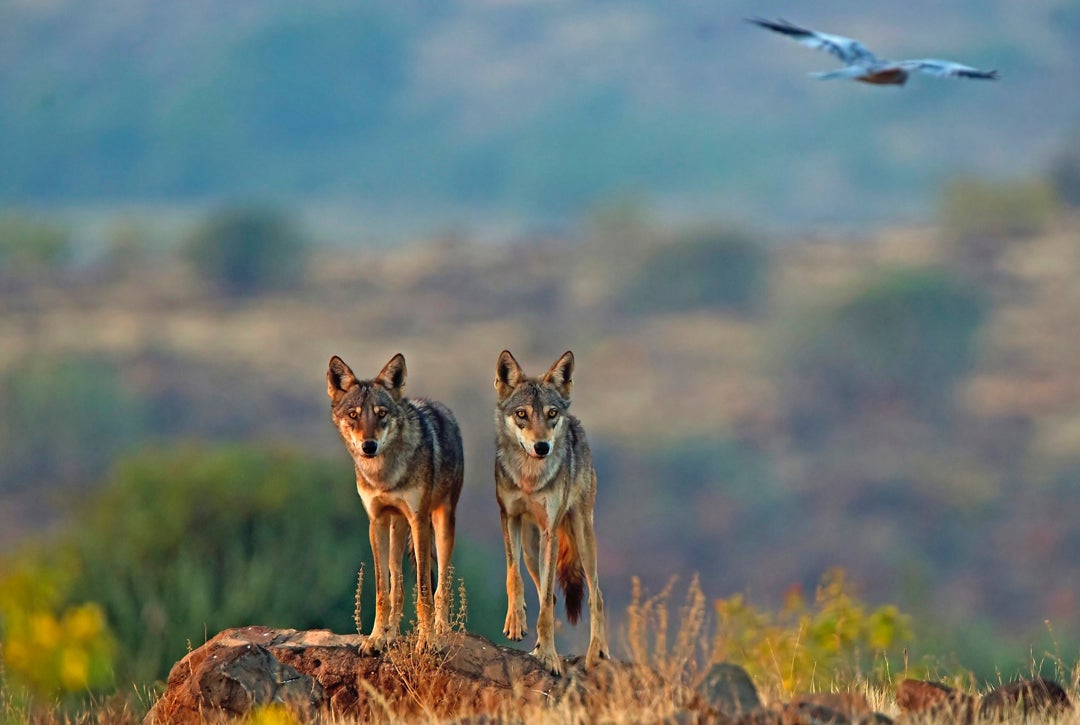
The wolves of India may be best known as the pack that raised Mowgli in “The Jungle Book.” But real Indian wolves carry a story that is older, more complex and more urgent than fiction — one written into their DNA.
Rice bioscientist Lauren Hennelly is helping bring that story into focus. Her research shows that Indian wolves, along with nearby Tibetan wolves, represent some of the oldest and most genetically distinct lineages of gray wolves in the world.

“I had previously led work showing that Indian and Tibetan wolves were the two oldest evolutionary lineages of the gray wolf,” says Hennelly, an assistant professor of biosciences in the Wiess School of Natural Sciences. “When we expanded our work to sequence wolves from across Asia, we found even more hidden stories in their DNA.”
In a study published in Communications Biology, Hennelly and a team of scientists from 11 countries collected and analyzed DNA from wolves across Asia. They found that wolves in southern Asia contain an unexpectedly large amount of unique genetic variation, making the region an important reservoir of global wolf diversity.
The finding places southern Asia at the center of a larger evolutionary story — one that may help scientists better understand how wolf populations changed over time and how distinct lineages persist.
Wolves are famously wide-ranging animals, with reported journeys of more than 500 miles. Those movements often lead to genetic mixing, or gene flow, between populations. In northern Asia and North America, for example, gray wolf populations are genetically similar across vast distances because of that mixing.
Southern Asia, however, told a different story. Hennelly’s data showed sharply defined geographic boundaries among three major wolf lineages: Indian, Tibetan and Holarctic. Even though these populations now live relatively close to one another, the Indian and Tibetan lineages were isolated from other wolves for more than 100,000 years.
Past climate shifts, including habitat changes during glacial cycles, may have helped create that separation. But the genetic distinctions have remained even as those earlier barriers disappeared.
“We found that Pakistan is the global hotspot of gray wolf diversity. That is because this location is where all three major lineages of wolves come together,” Hennelly says. “How and why these different types of wolves remain genetically distinct despite living so close to each other is a question that could help us understand fundamental questions in evolutionary biology, like the early stages of speciation.”
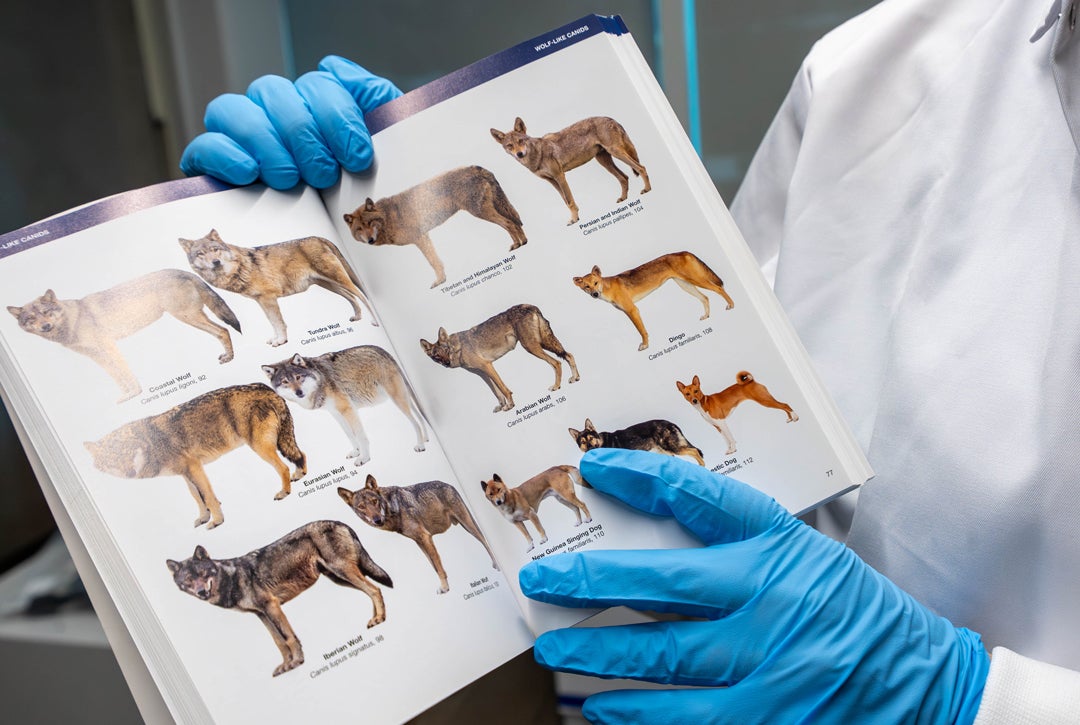
The research also has conservation implications. Although the gray wolf species is considered stable overall, Hennelly’s work shows that Indian and Tibetan wolves should not be treated as interchangeable with wolf populations in Europe or North America. Their genetic distinctiveness makes their survival especially important.
Hennelly co-led a working group that estimates the Indian wolf population includes about 3,000 individuals and faces a high risk of extinction in the foreseeable future. Under the International Union for Conservation of Nature, both the Indian wolf and Tibetan wolf are now classified as threatened.
“Only through genetics could we understand that these are unique wolves found nowhere else,” Hennelly says. “Our work not only informs the conservation status and taxonomy of these wolves but highlights the importance of conserving these two evolutionarily distinct populations, and preserving the full spectrum of wolf genetic diversity, before it’s too late.”
From the Fall 2026 issue of Rice Magazine