
Writing Beyond the Page
Rice’s new MFA brings together craft, community and Houston’s literary energy.

By Sarah Brenner Jones and Sarah Rufca Nielsen
Rice’s new Master of Fine Arts in Creative Writing is designed around a simple premise: Writers are shaped by more than books and workshops. They are shaped by place, by language, by community and by the urgent questions of the world around them.
The new program was years in the making, shaped by deep reflection on what writers — and the world they write for — need now. Launched this fall, Rice’s MFA offers a bold reimagining of creative writing education thoughtfully rooted in Houston, shaped by a celebrated faculty and built around the idea that writers have work to do in the world.
The inaugural cohort comprises four writers selected from a pool of 140 applicants. The small group reflects the program’s emphasis on close mentorship, intensive workshops, and a model of graduate writing education designed to be both ambitious and deeply personal. At the same time, writing is positioned as a collaborative art, one that gains power when it is in conversation with others.
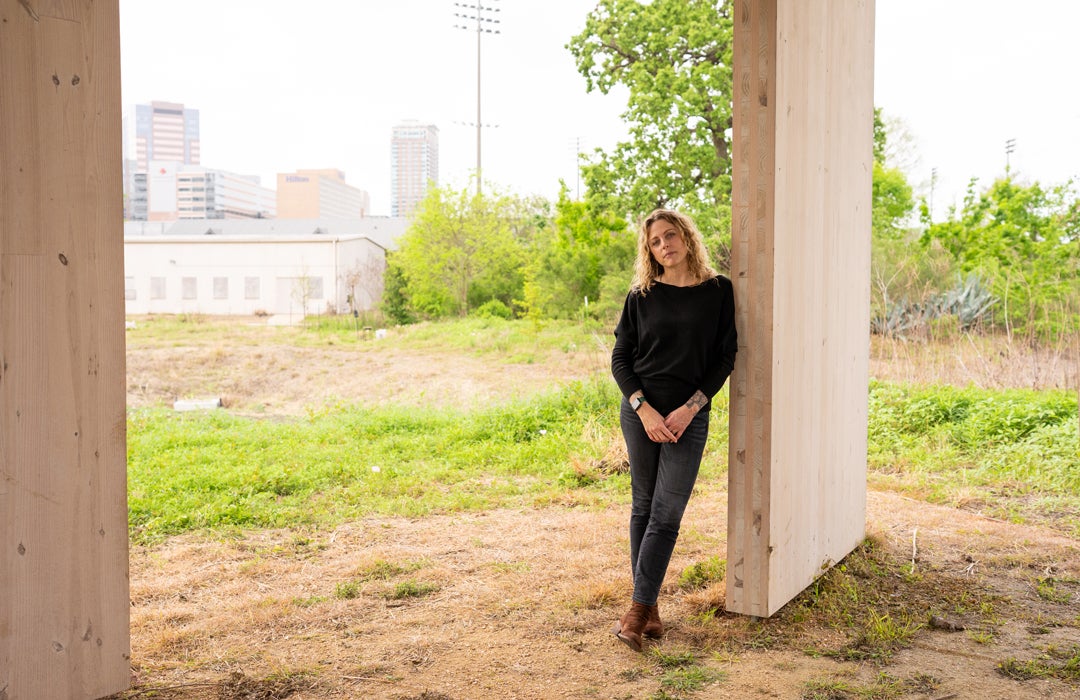
“With this MFA, Rice is investing in writers who can think across boundaries, engage deeply with communities and bring new language to urgent questions,” says Kathleen Canning, dean of the School of Humanities and Arts. “This program is certain to elevate Rice as a national leader in creative writing while advancing the reputation of Houston as a premier literary and cultural hub.”
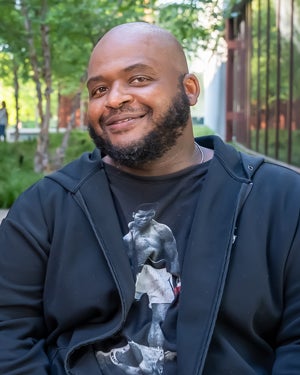
The program’s structure reflects that ambition. MFA students explore fiction, poetry, nonfiction, translation and hybrid forms, moving across genres rather than narrowing too quickly into one. For Rice professor Kiese Laymon, author of “Heavy: An American Memoir” and a 2022 MacArthur Fellow, that openness is one of the program’s defining strengths. “The goal isn’t to create one kind of writer,” he says. “It’s to make space for many kinds of creation.”
The focus on artistic range, in addition to civic purpose and a deep attention to place, give Rice’s MFA program its shape. Rooted in Houston and the Gulf Coast, the program challenges students to cross into the cultural life of the city and invest deeply in its communities. Students are set to partner with Houston nonprofits, schools and other cultural institutions, contributing as writers, teachers, editors and creative collaborators.
Laymon says when he was growing up in Mississippi, Houston carried its own mythic force — a city whose music, language and swagger traveled far beyond Texas. “There’s so much writerly energy around Houston and around this area,” he says. “I feel like it’s just begging to be tapped or centralized in some way.”
Lacy M. Johnson, director of the new MFA, has long treated writing as a form of civic action. An essayist, memoirist, curator and social activist, Johnson is the author of “The Reckonings” and “The Other Side,” both National Book Critics Circle Award finalists, as well as the memoir “Trespasses.” She founded the Houston Flood Museum, an evolving digital archive of poetry, testimony, reporting and visual work; and co-edited “More City Than Water: A Houston Flood Atlas,” a collaborative volume documenting the city’s experience with flooding and its connections to climate catastrophe, wealth inequality and racial disparity.
For Johnson, this is not work adjacent to writing. It is writing’s larger purpose. “Millions of stories are interwoven here. The question for me is how to amplify those stories in ways that create change, that affect policy, that reach people involved in decision-making,” she says. “Our students will take the skills they learn at Rice and use them to benefit the places they live.”
“Part of what makes Rice’s MFA unique is its integration with the Houston community,” agrees Phillip B. Williams, a poet, novelist and author of “Ours.” As a professor of creative writing, Williams pushes students to rethink what it means to be a successful writer by considering not just where work circulates but whom it serves. “Writers are servants to the public, though that’s sometimes forgotten in a culture of celebrity. I’m proud that [Rice has] a different vision — and the resources to make it real.”
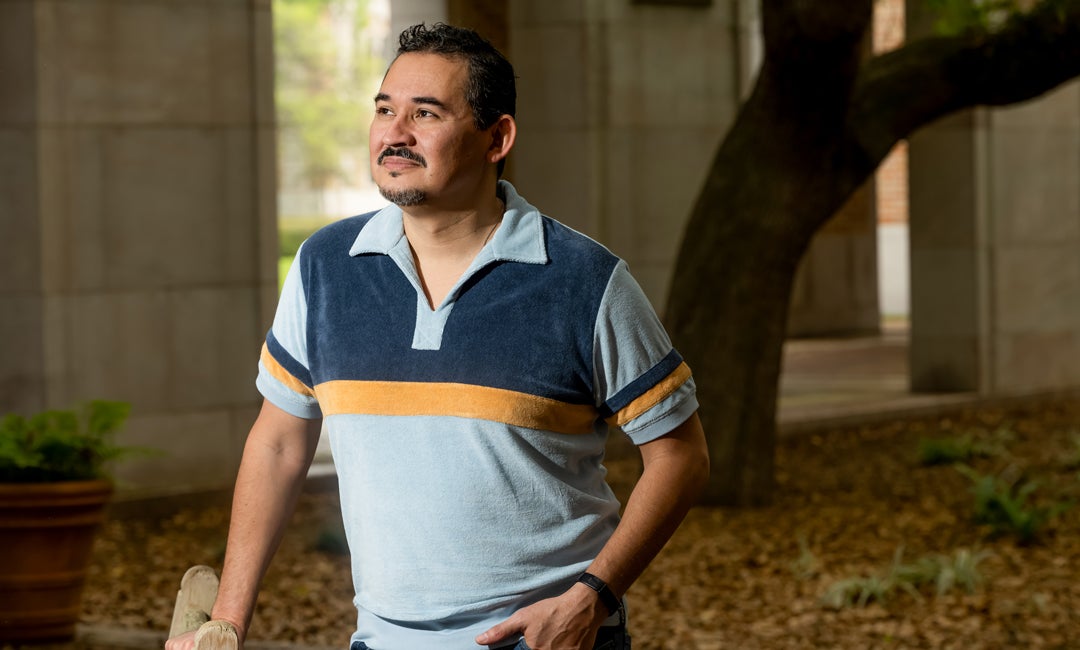
That sense of creative purpose carries naturally into translation, which Rice’s MFA curriculum treats not as a secondary skill but as an art form of its own. Associate professor Tomás Morín, a poet, memoirist and translator of Pablo Neruda’s “The Heights of Macchu Picchu,” sees translation as a kind of artistic cross-training.
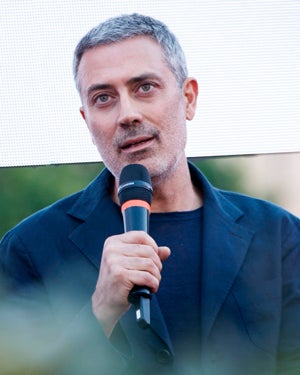
Morín tasks his students to begin not with mastery but with weakness. A poet struggling with metaphor might translate Federico García Lorca; a fiction writer working on dialogue might seek out a writer whose ear for speech is sharper than their own. The point is not imitation but growth through close attention. “Translation is an art form,” Morín says. “It’s the purest form of close reading there is.”
Andrea Bajani, Rice professor in the practice and a novelist whose most recent book won Italy’s most prestigious literary prize, likewise brings students a global view of literature shaped by movement across languages. At Rice, he frames translation as an act of trust and imaginative crossing. “Translation requires empathy,” Bajani says. “It is a mutual act of trust, a way of feeling what another life or another culture means through a shared language.”
The program is designed to challenge writers across genres and forms while giving them the time, mentorship and creative environment to do their best work. Just as important, it asks students to put that work in conversation with Houston — investing in the city as a place of vital stories and voices and helping establish a program that could become a national model for what creative writing education can be.
Kathleen Canning is the Andrew W. Mellon Professor of History and dean of the School of Humanities and Arts. Kiese Laymon is the Libbie Shearn Moody Professor of Creative Writing and English. Lacy M. Johnson is the Bruce and Elizabeth Dunlevie Associate Professor of English and Creative Writing.
From the Fall 2026 issue of Rice Magazine