
The Road He Paved
The late Richard Tapia applied his brilliance and determination to advancing mathematics — and to changing who succeeds in STEM.
By David D. Medina
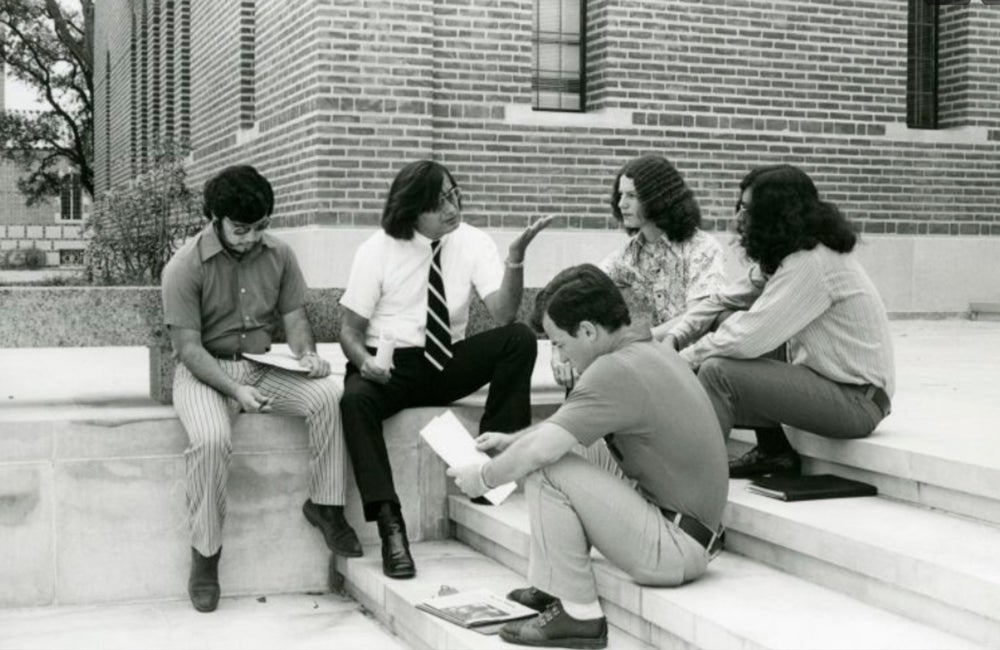
Richard Tapia arrived at Rice in 1970 with the energy and force of a Texas tornado. Spending more than half a century at the university, Tapia built a legacy defined by mathematical excellence, dynamic leadership and a fierce commitment to opening doors for underrepresented minority groups.
Born in Los Angeles to Mexican immigrants, Tapia was the first in his family to graduate from college, earning his bachelor’s, master’s and doctoral degrees from the University of California, Los Angeles. At Rice, he stood out not only as the university’s first Latino faculty member, but also for his long hair and passion for hot rods, most notably his custom, award-winning 1970 Chevrolet Chevelle. But beneath his unconventional exterior was a brilliant mathematician who quickly rose through the academic ranks, earning renown for his work in numerical optimization methods — the science of finding the best possible choices from a wide array of options to solve mathematical problems using numerical algorithms. His groundbreaking research influenced modern approaches to everything from transportation, supply chain management and finance to artificial intelligence.
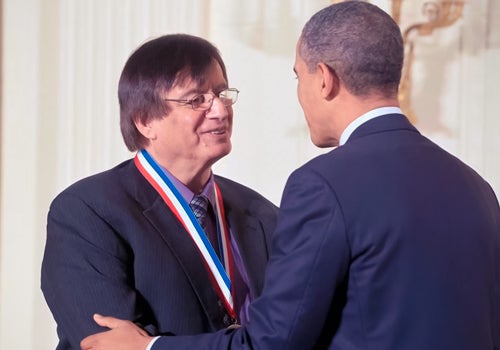
Tapia wrote or co-wrote more than 100 papers and, with Rice colleague James R. Thompson, founding chair of Rice’s statistics department, published two important textbooks in his areas of research. He supervised 30 doctoral candidates, and in 2005, he was bestowed the title of University Professor, Rice’s highest academic honor. In 1992, he became the first American-born Latino elected to the National Academy of Engineering, and he was later appointed to the National Science Board and awarded the National Medal of Science by President Barack Obama in 2011.
As brilliant as Tapia was as a mathematician, his impact extended far beyond numbers. He was a leading advocate for diversity in higher education, working tirelessly to increase the number of underrepresented students, professors and university staff members.
In 1972, just two years after arriving at Rice, he founded the university’s first Hispanic student group, which eventually became the Hispanic Association for Cultural Enrichment at Rice, better known as HACER. In 2016, he founded the Tapia Center to encourage underrepresented students and educators to pursue careers in science, technology, engineering and mathematics. Its summer program started with just 20 students and has since hosted 1,600 high school students from around the world.
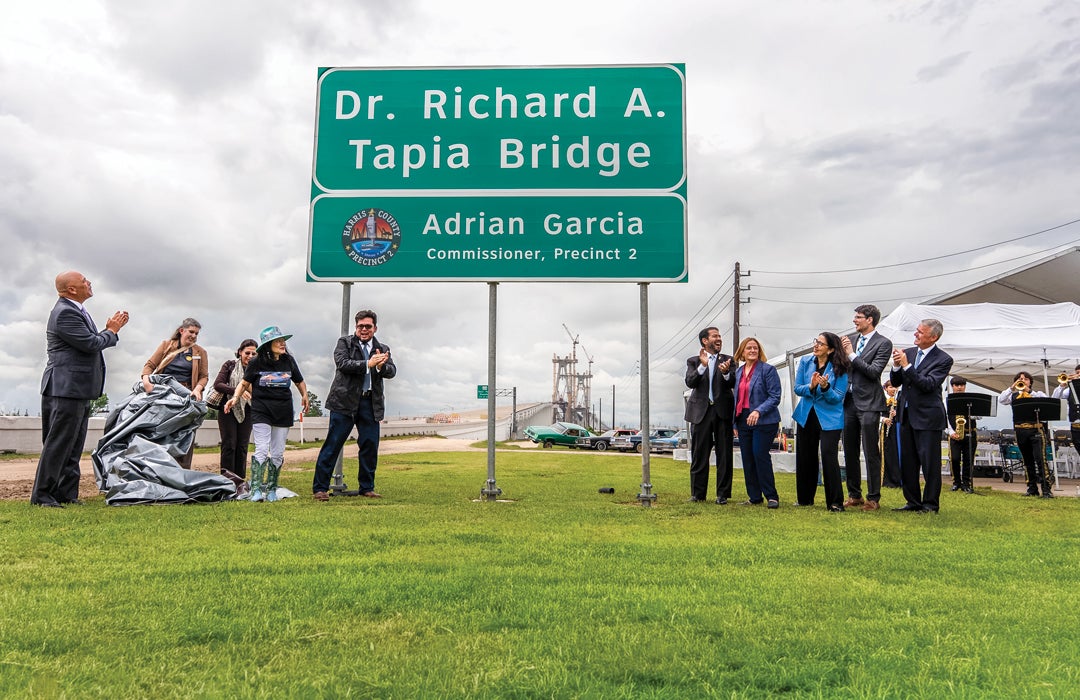
Shortly before his death in May 2026, Tapia received a fitting acknowledgment of a life spent breaking barriers and creating pathways for others when the Harris County Commissioners Court renamed the Houston Ship Channel bridge in his honor.
“Just as the bridge will connect communities across Houston, Richard’s life work has created pathways for countless students, especially those underrepresented in STEM, to pursue their ambitions and realize their potential,” Rice President Reginald DesRoches said.
From the Fall 2026 issue of Rice Magazine
Body