
A Place to Rest, a Prairie to Restore
How Elisa Maciá Donovan created an eco-friendly cemetery that supports conservation of the coastal prairie.
By Robyn Ross
The morning of Trudy Catania’s burial in 2025 dawned cloudless and bright. Her family gathered around her simple bamboo coffin, and after the grave was filled and the topsoil replaced, they scattered wildflower seeds on the ground. It was a portentous moment, as nature-loving Catania was the first person laid to rest at Blazing Star Sanctuary in the Katy Prairie Preserve, located roughly an hour west of Houston.
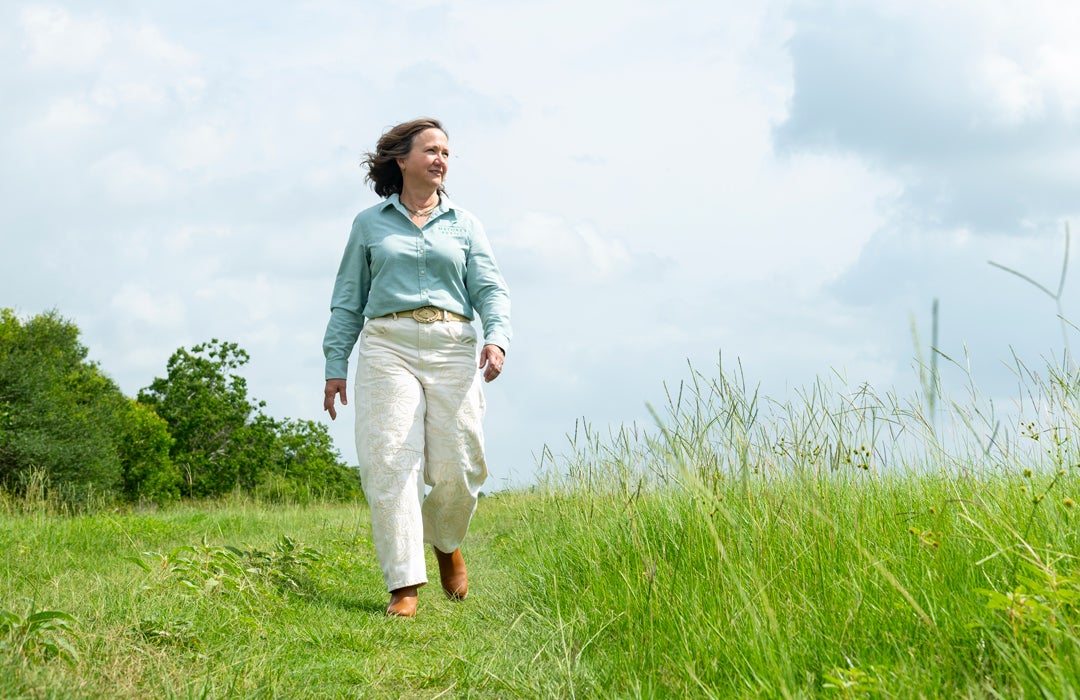
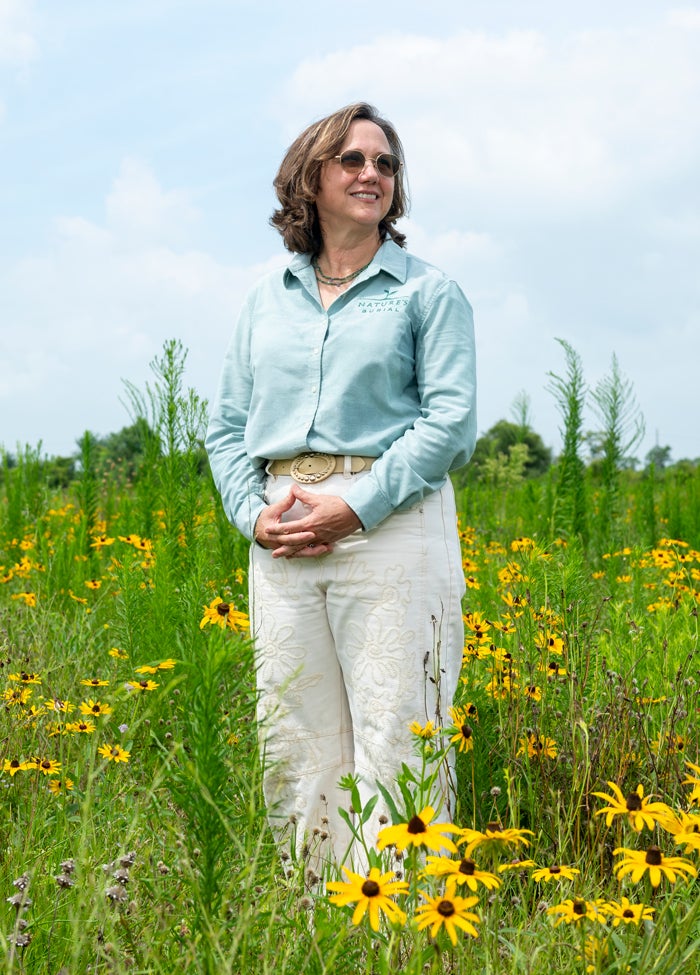
Blazing Star Sanctuary is Texas’ first certified conservation cemetery and the brainchild of Elisa Maciá Donovan ’92. At Blazing Star, the deceased are not chemically embalmed, and they are interred in simple shrouds or caskets made from biodegradable materials. Graves have neither concrete liners nor headstones, and the cemetery is part of a vibrant restored prairie that’s a haven for birds and other wildlife. Over time, the dead return to the earth, while the natural setting offers a balm for the living.
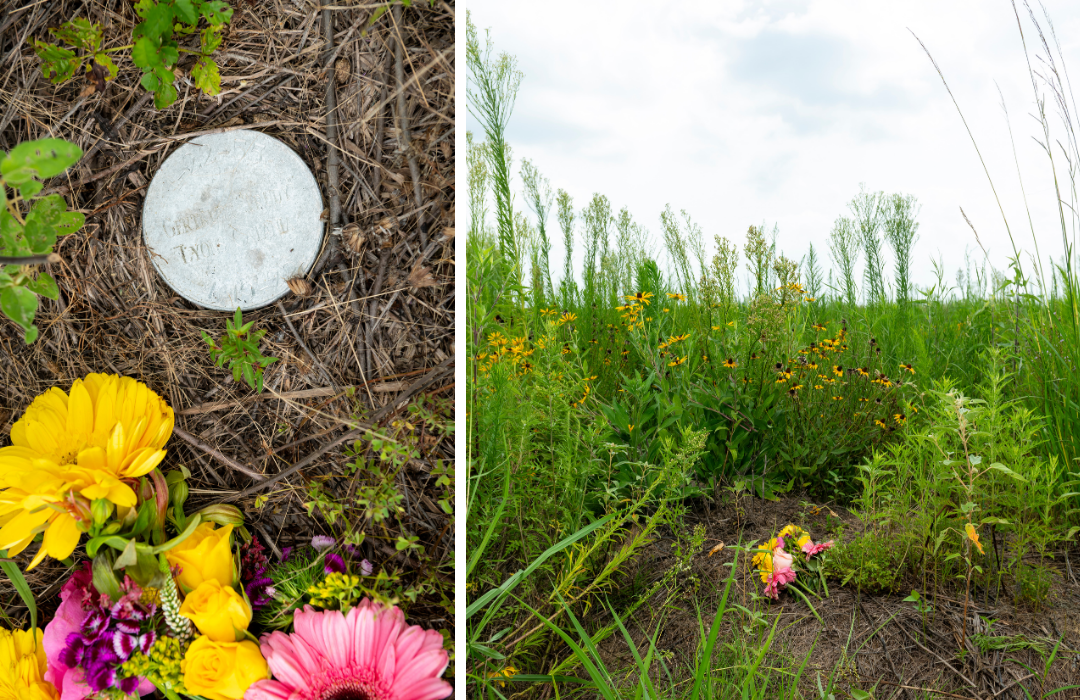
Some of Catania’s relatives had raised their eyebrows at the unconventional setting. But after the service, they were converted: several even bought plots of their own.
“At this time of burial, which is so emotionally difficult for people, having nature as part of that experience is healing,” Donovan says.
Donovan grew up in West Houston, playing in a wooded area that later became the Edith L. Moore Nature Sanctuary. The experience fostered “a yearning for natural, wild, undeveloped spaces,” just as such places were disappearing beneath Houston’s suburban sprawl. She followed her brother, Mario Maciá ’91, to Rice, where she studied materials science and engineering and met her husband, Barry Donovan ’90.
After earning her J.D. from Harvard, Donovan returned to Houston and built a legal career in the energy industry. Her interest in the green burial movement was piqued after reading “Here If You Need Me,” a memoir by chaplain Kate Braestrup detailing her work on search-and-rescue operations in the Maine wilderness. Donovan was struck by Braestrup’s description of one missing person’s remains, discovered after years in the forest with a tree growing amongst the bones.
“The way she described it, this was the most beautiful, peaceful resting place for this person,” Donovan remembers. “It just struck me that that’s how it should be; we should be enveloped by the earth. We’re all going to go at some point. Do we want to be chemically embalmed and fertilized and mowed, or can we return to the natural world in a more meaningful way?”
In 2017, Donovan became vice president and general counsel of the Coastal Prairie Conservancy, which protects 34,000 acres of Southeast Texas’ tallgrass prairie. Her role involves negotiating land purchases and conservation easements for the nonprofit. But land is expensive. A green cemetery, she realized, could generate revenue through plot sales to protect more land. With the American death care industry generating more than $20 billion annually, Donovan notes that “if we take just 1% of that and turn it toward land conservation, that would have a really meaningful, world-changing impact.”
The 8-acre sanctuary is one of 13 burial grounds in North America certified as conservation cemeteries by the Green Burial Council: prioritizing habitat restoration in addition to natural interments. The formerly agricultural land now boasts reconstructed wetlands for bird habitat and a carpet of native grasses and wildflowers, including liatris, the spiky purple “blazing star” that’s the sanctuary’s namesake.
“Being able to leave something positive is so healing and impactful for the families that have chosen to work with us,” Donovan says. “It’s an honor to be part of somebody’s end-of-life plan.”
--
Go behind the scenes:
Photographer Anthony Rathbun talks about the experience of shooting inside Blazing Star Sanctuary.
From the Fall 2026 issue of Rice Magazine
Body