
Particles of Confederation
Rice’s DUNE-TECH program introduces undergraduates to the science behind one of the nation’s most ambitious physics experiments.
By Rachel Leeson
Following a successful pilot in 2025, Rice held the second DUNE Training ExperienCe Houston in June, introducing undergraduates from across the country — and potentially the next generation of neutrino physicists — to one of the world’s most ambitious physics experiments.
Funded by the Department of Energy, the program introduces undergraduates from across the country to the science and technology behind the Deep Underground Neutrino Experiment, the largest neutrino experiment ever undertaken in the United States.
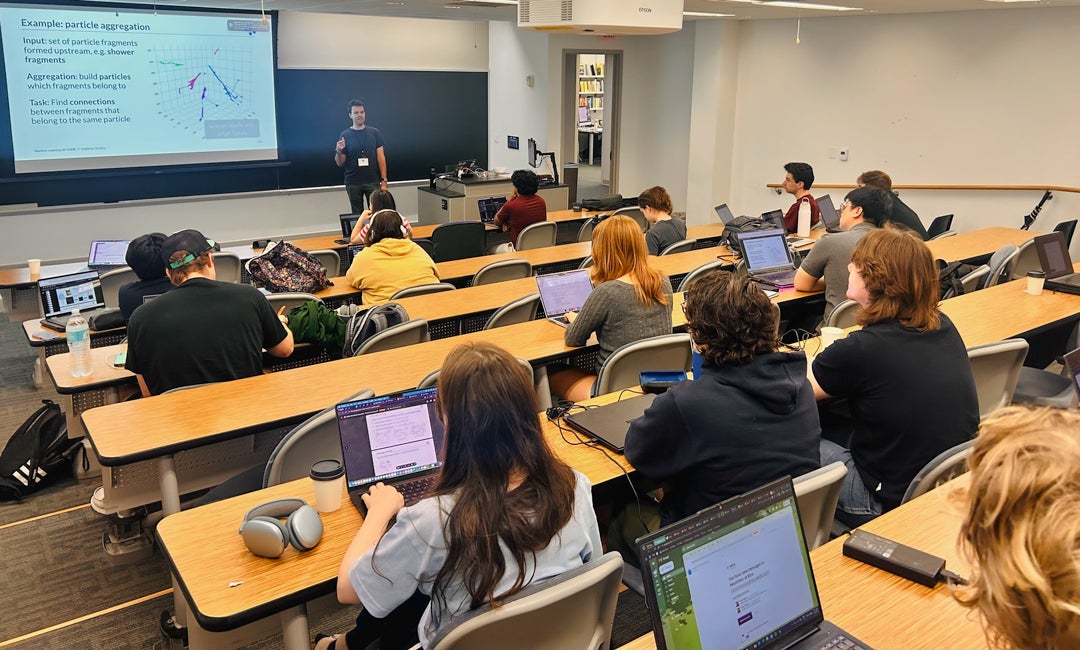
Students begin with training at their home institutions before gathering at Rice for a week of lectures, coding workshops and hands-on collaboration.
“DUNE-TECH is about setting up the future of neutrino physics,” says Aaron Higuera, assistant research professor of physics and astronomy at Rice and the program’s principal investigator. “The students in our classrooms today will be leading the DUNE experiment in the future.”
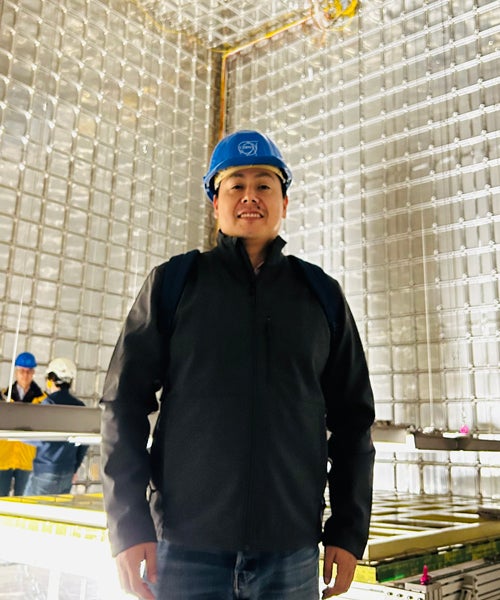
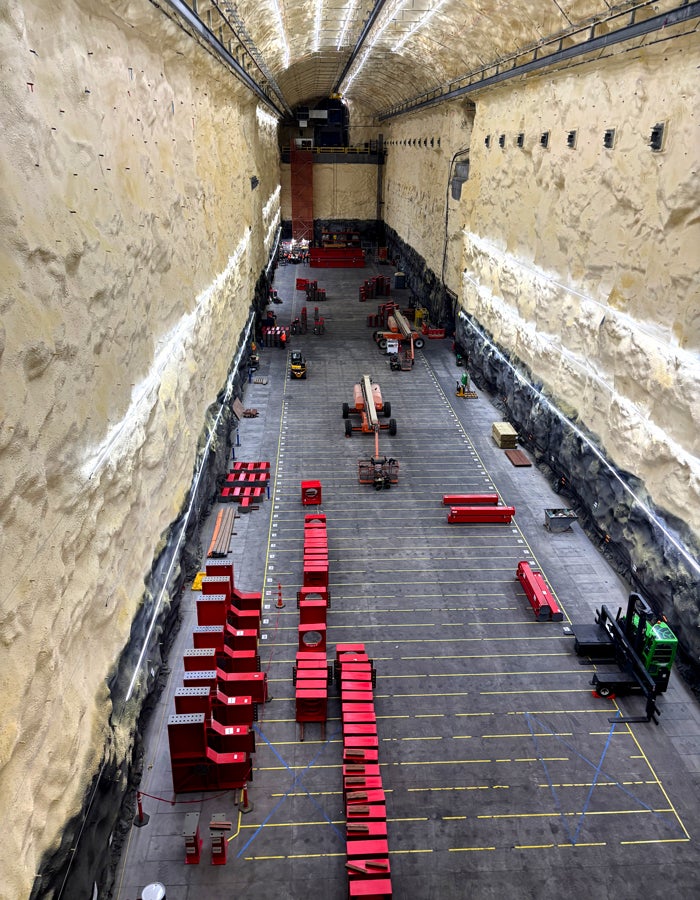
The week begins with an introduction to neutrinos, the second most abundant particle in the universe. DUNE uses detectors at South Dakota’s Sanford Underground Research Facility to measure a high-intensity neutrino beam sent 1,300 kilometers underground from Fermilab in Illinois. The experiment aims to answer long-standing questions about neutrino oscillations and the fundamental nature of the universe.
Designed to make a complex and often intimidating field more accessible, the program gives students a foundation in the science behind DUNE while creating space for questions, collaboration and mentorship.
“DUNE-TECH can take students from being interested in neutrino physics to a career in the field,” says Higuera. “An intensive research experience like this is the reason why I’m studying neutrinos today, and it’s exciting to be creating similar opportunities for students today.”
Students begin with the building blocks of neutrino physics before turning to the computational tools that drive modern particle physics. As much of DUNE’s research relies on software, AI and machine learning, the second half of the program focuses on coding and data analysis.
For Olivia Ba, a rising sophomore at Texas Southern University who hopes to earn a doctorate in nuclear physics, the experience offered exactly the kind of preparation she was seeking.
“One of my goals is to develop my programming skills,” she says, adding that she especially valued the lectures, pre-readings and one-on-one mentoring.
Rice undergraduate Annabel Ohman ’28 appreciated the program’s blend of technical training and professional development.
“I’m learning how to code,” she says. “I’m seeing physics in action and networking.”
This year’s program was also dedicated to the memory of University Professor Richard A. Tapia. “His mentorship created many pathways for underrepresented groups in STEM,” Higuera says. “DUNE-TECH is honored to be continuing that work.”
From the Fall 2026 issue of Rice Magazine