
Fever Pitch
For one exhilarating month, the World Cup seemed to be everywhere at Rice.
By Andrew Bell
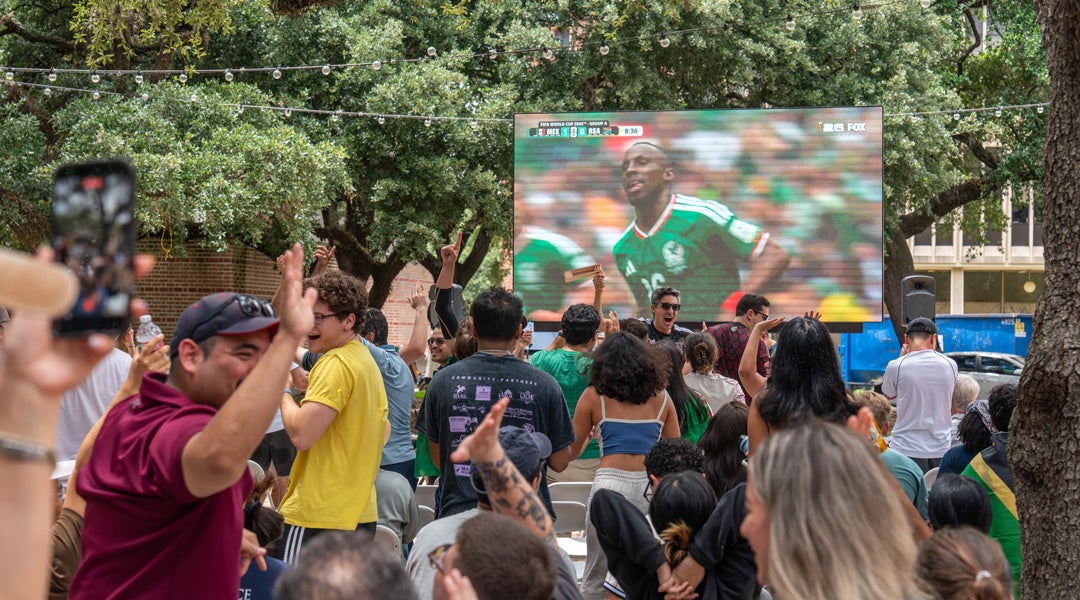
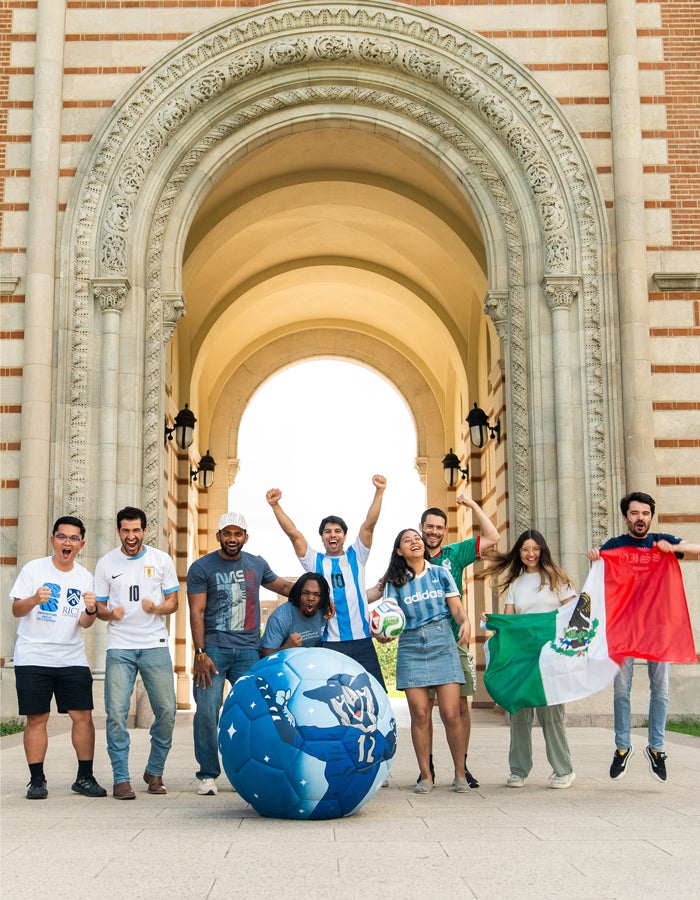
For one exhilarating month, the World Cup seemed to be everywhere at Rice. Cheers erupted from crowds in the balmy courtyard outside Valhalla. A sea of orange blanketed an entire block of Greenbriar next to Rice Stadium. A giant blue soccer ball took up residence outside the Sallyport.
As the only university named an Official Houston World Cup 2026 Host City Supporter, Rice made the most of a unique opportunity to introduce itself to a global audience — showcasing its tree-lined campus, world-class research and the welcoming community spirit that makes Rice distinctive.
“The World Cup is a chance to showcase not just Houston but everything that makes Rice special,” President Reginald DesRoches said before the tournament. “We’re excited to welcome people from around the world to our campus and be part of an event that celebrates community, culture and connection.” That spirit was hard to miss. At watch parties from Rice Stadium to the Ion, longtime soccer devotees stood shoulder to shoulder with first-time fans, united by the drama unfolding onscreen and throughout the city. More than 500 Rice staff, students, faculty and alumni also volunteered to welcome fans and support World Cup events across Houston.
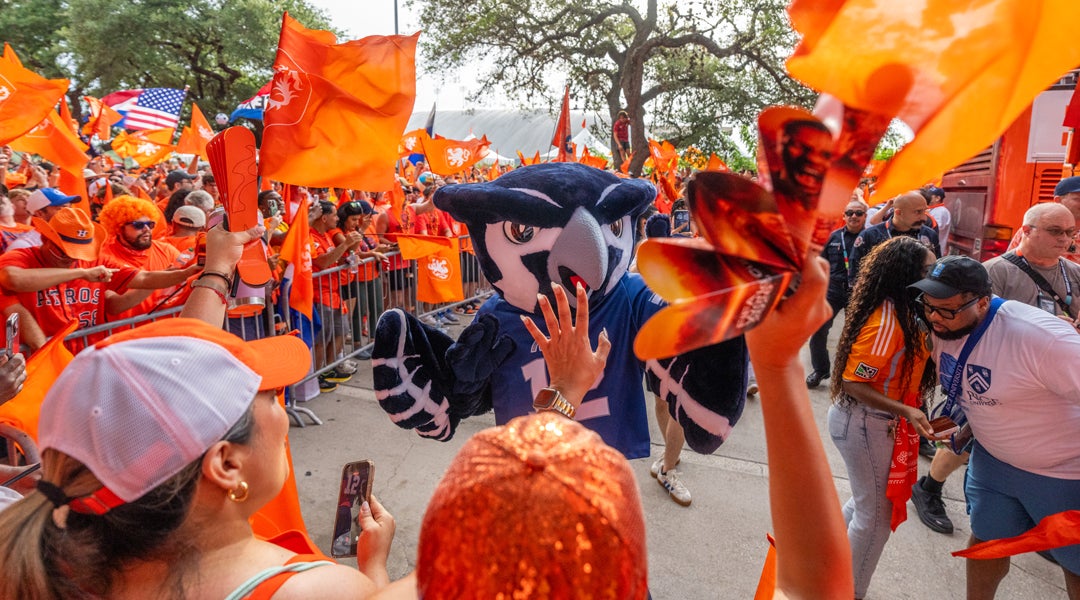
The biggest splash of color came when an estimated 10,000 Dutch supporters and Houstonians gathered near Rice Stadium for the Oranje Fanwalk, singing and dancing before marching their way to Reliant Stadium (known as Houston Stadium during the World Cup) to watch the Netherlands take the pitch. For a few electric hours, the edge of campus became the starting line of an international street party.
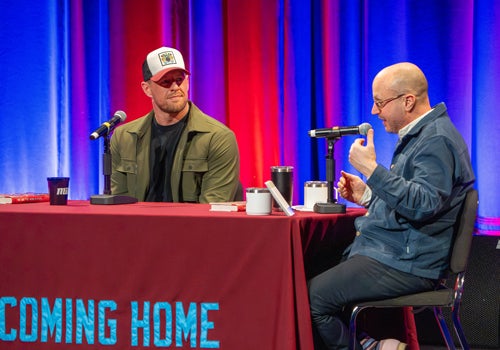
But the buildup began months earlier, when Rice hosted a live “Men in Blazers” show at Brockman Hall for Opera featuring special guests J.J. Watt and Hakeem Olajuwon. In February, Rice also hosted “The World at Play,” an interdisciplinary conference exploring soccer’s cultural and global influence. Students landed World Cup-related internships that took them behind the scenes, while researchers and community partners used the tournament as a platform to advance sustainability and civic engagement.
At the FIFA Fan Festival in East Downtown, Rice put its research directly into visitors’ hands. Festivalgoers climbed onto a swing suspended by less than an ounce of carbon nanotube fiber. The installation paired the familiar geometry of a soccer ball with the iconic buckyball, visually linking the energy of the tournament to the Rice discovery that helped launch a new era of nanoscale science.
And Rice’s reach extended well beyond those who came to campus or participated in university-sponsored activities across the city. Images of the Oranje Fanwalk traveled through international media, while Rice’s World Cup-related content generated more than 3.2 million views across university social channels. A multilingual virtual campus tour offered another introduction to Rice’s research, traditions and community for audiences around the world.
Eventually, the final whistles blew. The screens came down. The crowds moved on.
But Rice had offered more than a place to watch the game. The partnership showcased something difficult to capture in a ranking or brochure: how Rice’s world-class ambitions, intimate campus and close-knit community come together in one extraordinary place.
From the Fall 2026 issue of Rice Magazine