
Ambition in Action
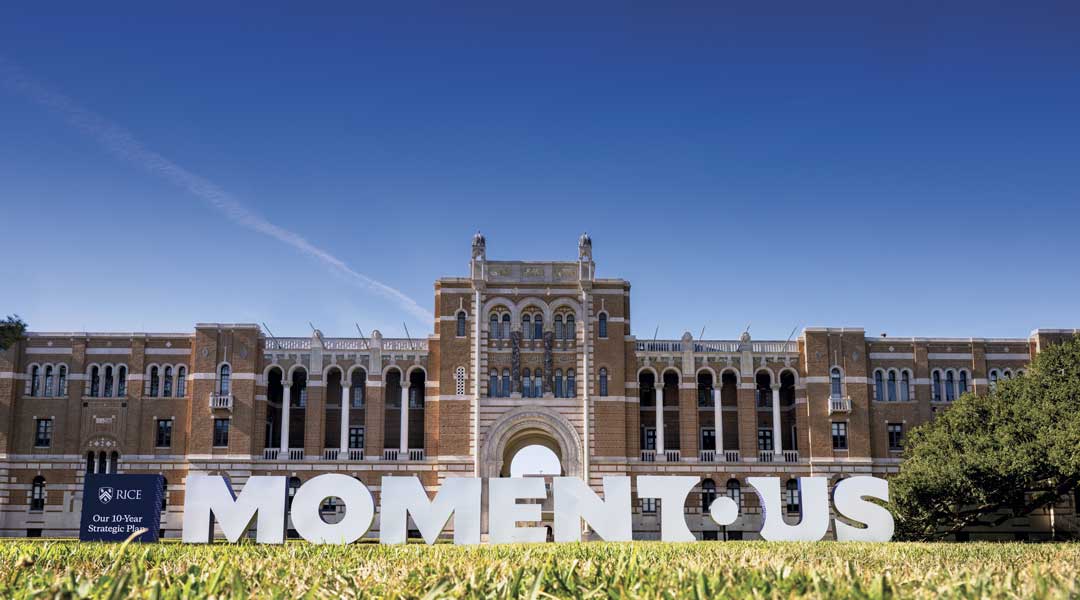
Two years into Momentous, Rice’s 10-year strategic plan, major investments in teaching and research are already reshaping the university.
By Deborah Lynn Blumberg
A new brain institute. Record undergraduate applications. A rising global reputation. Across Rice, a growing list of milestones is bringing the university’s long-term vision for teaching and research into sharper focus.
That vision took formal shape with the launch of Momentous, Rice’s 10-year strategic plan, in fall 2024. The initiative established a set of core objectives designed to elevate the university’s academic impact and global standing around two focus areas — premier teaching and premier research. “Momentous laid out the vision for Rice’s next 10 years and how we, as a university community, intend to work together to achieve that vision,” says Provost Amy Dittmar. “We’ve already made significant progress toward achieving our goals, and active work is underway on all 33 of them.”
Major achievements to date include securing a $55 million investment in the Kinder Institute for Urban Research, committing $20 million to enhancing the salaries and benefits of Rice staff, and Rice’s rise to No. 17 in U.S. News & World Report Best Colleges. Rice also launched the Center for Latin American and Latinx Studies, while the $500,000 NEH-funded Center for Humanities-based Health AI Innovation, co-led with Baylor College of Medicine, is setting a national standard for ethical AI in health care.
“Several of our goals are already ahead of target, such as undergraduate participation in research and global learning,” says Dittmar. “These high-impact practices can be truly transformative.” In fact, undergraduate research participation already exceeds the 2030 goal of over 70%. Global learning is accelerating, too, with participation in global programs rising from one in five Rice students to nearly one in three through programs like the Rice Global Paris Center, Rice in Country language immersions and a new pre-health Fall in Paris semester.
Rice’s momentum extends to the lab and the land beneath it, too, from a $3.5 million Gates Foundation award tackling PFAS “forever chemicals” to a campus reimagined as a living lab for water reuse.
The first focus area, premier teaching, centers on personalized education that prepares students to lead and serve. “The infrastructure created under Momentous has directly shifted how we support scholars at all levels,” says David Sholl, vice president for research. “Programs like Vertically Integrated Projects now allow undergraduate students to embed themselves early into multiyear, faculty-led research teams. This structure bridges the gap between undergraduates and graduate mentors, providing clear pathways to publication, advanced studies and careers.”
When it comes to premier research, the strategic plan provides a structure for ongoing areas of focus to ensure Rice is leading global conversations. Since 2023, 84% of newly hired faculty have research tied directly to Momentous priorities, including 51 new tenure-track hires in fiscal year 2025 alone. Research funding is climbing sharply too, up 37.5% year-over-year to a record $257.9 million in fiscal year 2026.
“A primary example is our concerted push into health innovation and translational science through the Synthesis X Center and Biotech LaunchPad accelerator, which are rewriting the rules of cancer treatments and racing to turn bench-top discoveries into commercialized clinical products,” says Sholl.
“By combining heavy investments in specialized computing infrastructure, like our shared NVIDIA DGX compute cluster, with deep interdisciplinary partnerships spanning engineering, natural sciences and the humanities, Momentous is positioning Rice as an agile, elite powerhouse capable of tackling multifaceted societal challenges like brain health, urban demographic changes and sustainable energy.”
New landmark collaborations are extending that reach further still, including the Houston Methodist-Rice Digital Health Institute and a groundbreaking quantum materials partnership with Germany’s Max Planck Institute. “Our focus on strategic global and medical alliances is translating directly into world-changing discovery,” says Sholl.
Rice is also pioneering a human-centered approach to AI across research, teaching and discovery. In fall 2025, the university launched a Bachelor of Science in Artificial Intelligence, requiring coursework in AI ethics and history, and continues to expand that curriculum with a new master’s in AI developed this year. A universitywide AI hiring initiative has integrated 30 new faculty members across nearly every school, with 45 more hires planned over the next five years.
“AI isn’t going away, and it’s imperative for our students’ postgraduation success that we prepare them to think critically about AI and use it well,” says Dittmar. “To that end, nearly 250 faculty and staff have enrolled in Rice’s asynchronous AI teaching course, and 45 grants have been awarded to faculty experimenting with responsible AI in the classroom.”
Rice is also continuing to invest in the people who are bringing Momentous to life, with a new platform launched this summer to track progress and to ensure that momentum keeps building toward 2035. “Together, we can make progress at speed and scale,” says Dittmar, “to change not just our university, but the world that it sends its graduates into.”
Premier Teaching
Before Day 1, Rice’s Newest Students Get Their Hands Dirty
By Brandi Smith
On a humid July morning, incoming Rice students knelt in the mud along Houston’s Columbia Tap Trail and wrenched invasive plants from the ground, clearing space for native species and a new bioswale. Nearby, others walked the path with trash bags, filling them with litter. Most of these volunteers had met only days earlier. None had started classes.
They were the newest cohort of the Moody Civic Immersion program, a weeklong experience run by Rice’s Center for Civic Leadership that brings incoming students into the city before their first semester begins.
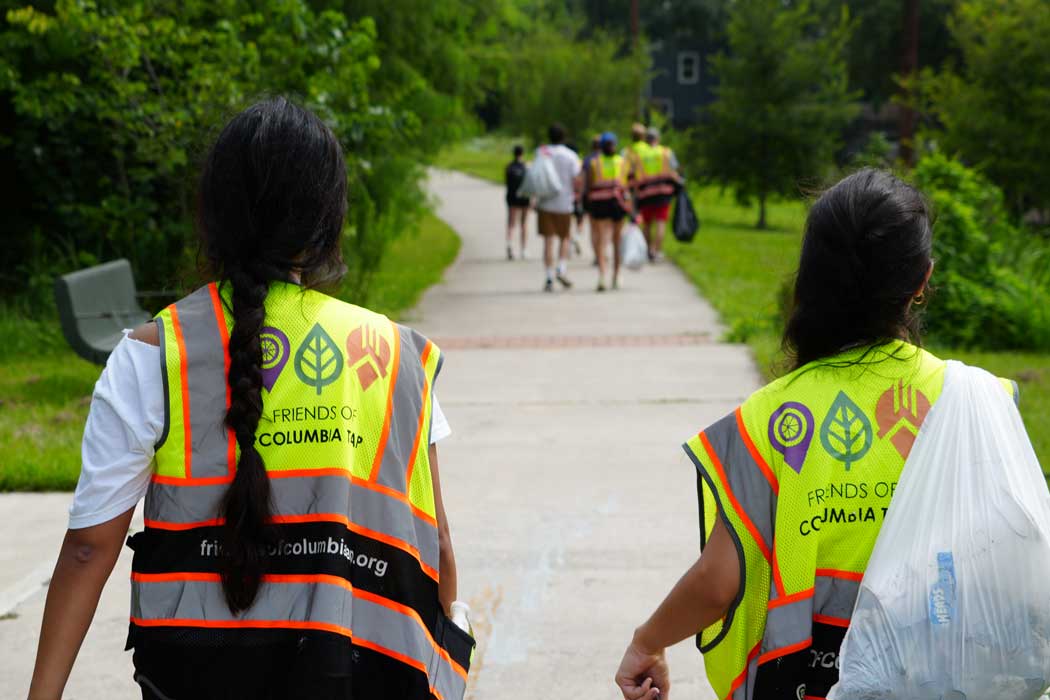
Through conversations with community organizations, service projects and neighborhood tours, participants consider how economic forces and historical inequities shape life across Houston.
“I was born in Houston but raised elsewhere, and I wanted to learn about the community I’m coming into,” says Jayden Rachal, an incoming freshman. “I want to know how to make an impact in a place I care about.”
But the experience is also designed to ease the transition to college, giving students a shared purpose and a network before the semester begins.
“Coming into a new environment, you never want to start at zero,” says freshman Karthik Kommineni. “This program is a strong start. It gets you above ground level in terms of socialization.”
Organizers hope students will carry that curiosity and commitment into their years at Rice — and continue learning from the city they now call home.
Built to Scale
By Sarah Rufca Nielsen
Following its launch in 2021, Rice’s undergraduate business major quickly became one of the university’s fastest-growing degrees — by fall 2025, more than 360 students had declared it, and more than 1,200 undergraduates were taking business courses.
The 2024 establishment of the Virani Undergraduate School of Business gave that momentum a structure — and a purpose. Created through a landmark gift from Asha Virani ’89 and Farid Virani, the school combines rigorous academics with entrepreneurship, experiential learning and career preparation. Through collaboration across disciplines, it also expands Rice’s ability to prepare students to lead through complex challenges in energy, healthcare and technology.
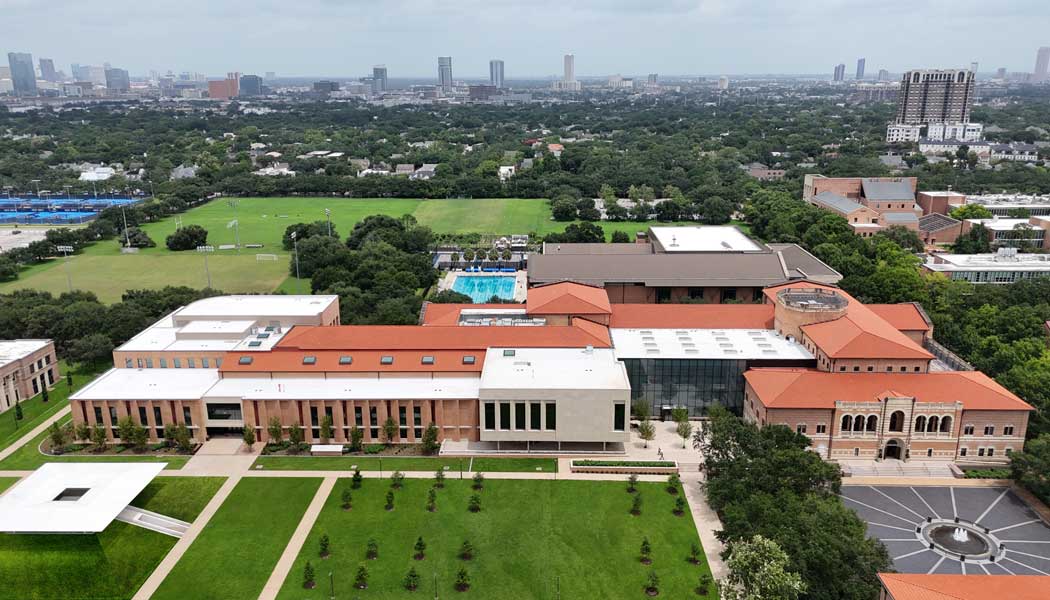
And as of this fall, that ambition now has a home. Asha and Farid Virani Hall opens on Sept. 10 with a ribbon-cutting ceremony. Connected to McNair Hall, the 112,000-square-foot building brings undergraduate and graduate business students together through flexible classrooms, breakout rooms, research and event spaces, a café and a light-filled atrium designed for connection.
“We hope Virani Hall becomes more than a place to learn,” Asha says. “We hope it becomes a place to belong.” Together, the school and its building make an evolution at Rice visible: Business is no longer simply a major, but a central part of how the university prepares students to lead.
Growing a Global Classroom
By Sarah Rufca Nielsen
Since the launch of Momentous, Rice’s International Summer Experience in Engineering Design has widened its map — and its definition of the classroom.
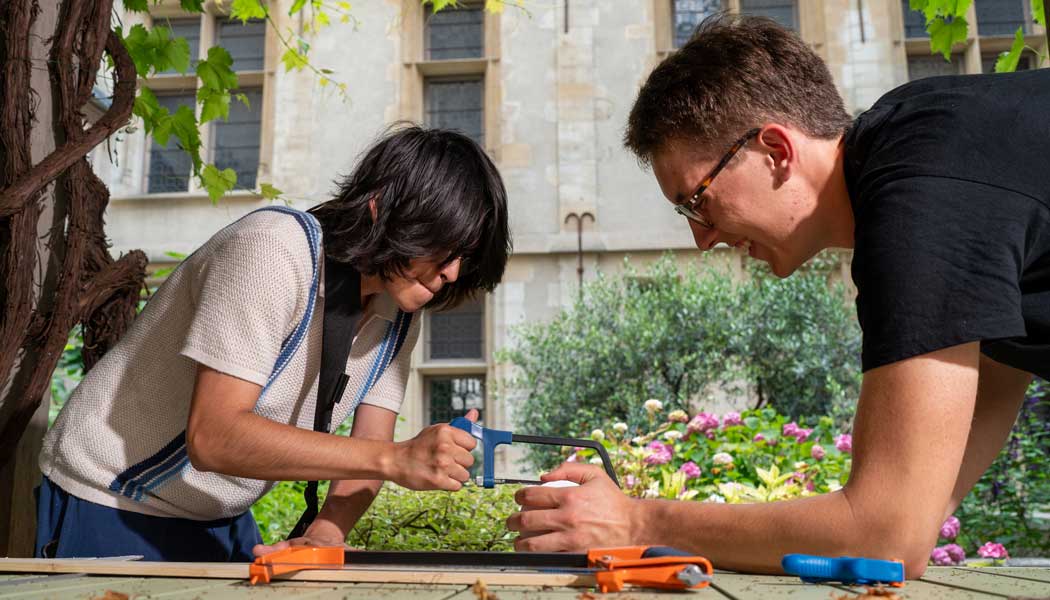
A program of the Oshman Engineering Design Kitchen, iSEED offers students the opportunity to spend several weeks in a different part of the world tackling design challenges shaped by real people, real constraints and very different ways of working.
Launched in 2017, iSEED grew substantially in 2025 when 44 Rice students worked on projects in Mexico, Kenya, Italy, France, the Netherlands and Japan. In summer 2026, Ireland joined the program’s growing list of destinations. Each location offers more than a new backdrop for familiar coursework. Students encounter different partners, resources and cultural expectations — and different ideas about what a successful design should accomplish.
Recent projects have included a device that automates urinalysis strip readings and an assistive tool for people with limited hand mobility. Students work with 3D printers, laser cutters and electronics labs, but the real challenge is learning when to listen, rethink and revise.
“Engineering isn’t just about the right answer. It’s about understanding people and context,” says Amy Dern, OEDK’s director of strategic initiatives and international programs.
Across borders, disciplines and design briefs, iSEED teaches students that engineering is as much about how they see a problem as how they solve it.
By the Numbers
-
13% increase in undergraduate applications (as of fall 2025)
-
15% year-over-year increase in doctoral applications
-
73% of students engaged in undergraduate research by graduation
-
50% increase in students participating in global experiences since Momentous launched, up to 32% of students
Premier Research
Lighting a Cleaner Path to Ammonia
By Silvia Cernea Clark
Rice researchers Naomi Halas, Peter Nordlander and Hossein Robatjazi have received the 2026 Hill Prize in Engineering for their work developing cleaner, light-driven methods of producing ammonia.
Halas, University Professor and the Stanley C. Moore Professor of Electrical and Computer Engineering, shares the honor with Nordlander, the Wiess Chair in Physics and Astronomy, and Robatjazi, vice president for research at Syzygy Plasmonics and an adjunct professor of chemistry at Rice.
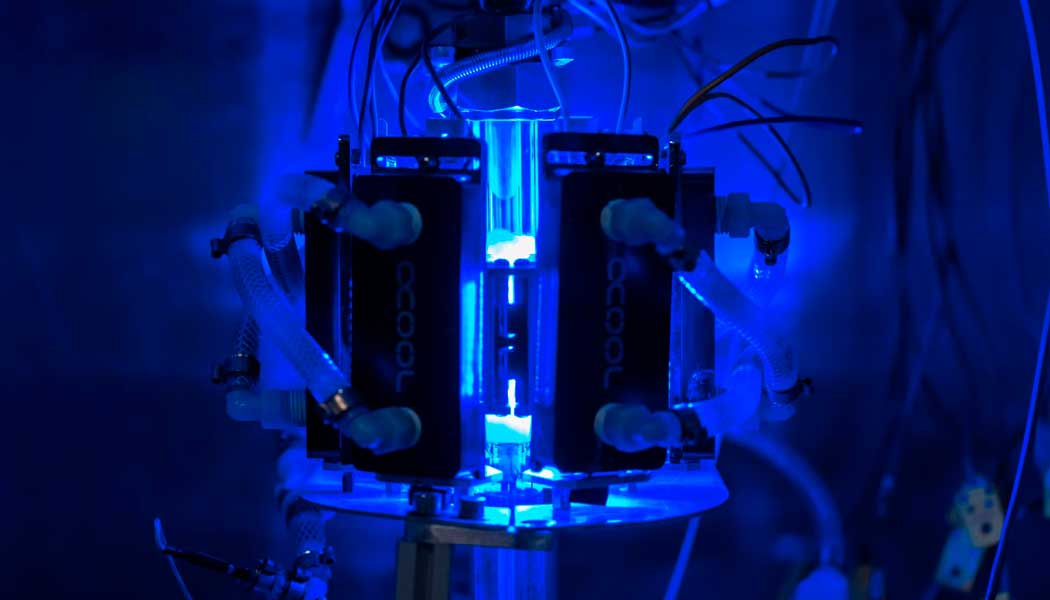
Ammonia is essential to fertilizer production and increasingly viewed as a potential hydrogen carrier and fuel. But conventional ammonia manufacturing relies on the energy-intensive Haber-Bosch process, a significant source of greenhouse gas emissions.
The Hill Prize supports high-risk, high-reward research by Texas innovators whose work could have broad societal impact and will support the team’s efforts to improve photocatalysts and reactor prototypes and build industry partnerships capable of scaling more sustainable production methods.
The project draws on decades of research by Halas and Nordlander in nanophotonics and plasmonics. Their work helped establish antenna-reactor photocatalysts, nanoscale systems that use light to drive chemical reactions, and provided the foundation for Houston-based Syzygy Plasmonics, which is developing light-driven processes for producing ammonia and other industrial chemicals without external heating or direct emissions.
Building a Place to Thrive
By Brandon Martin
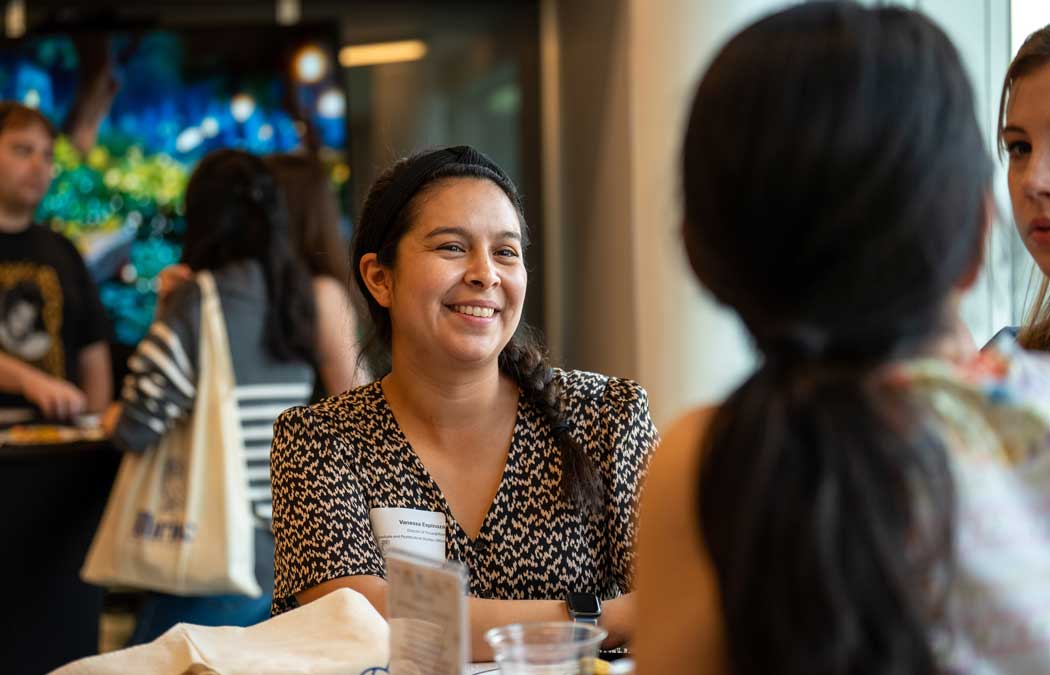
Beginning a doctoral program can be exhilarating but also isolating. Rice is helping students navigate that transition with Thrive, a program designed to support first-year Ph.D. students as they adjust to graduate life.
Created by the Office of Graduate and Postdoctoral Studies, Thrive brings together doctoral students from across business, engineering, humanities, music, natural sciences and social sciences for peer mentorship, structured conversations and informal gatherings. Participants also connect with campus resources and discuss challenges including imposter syndrome, time management, collaboration and maintaining balance.
“The transition to a doctoral program comes with many changes that can be both exciting and overwhelming,” says Vanessa Espinoza ’20, who leads the program and earned her Ph.D. in 2022. “Thrive was created as a support system that reminds students they don’t have to navigate those changes alone.”
For biochemistry doctoral student Hayden Stegall ’30, Thrive provided one of the first opportunities to meet peers outside his program.
“I had only met people in my department until I came to a Thrive event,” Stegall says. “It helped me realize how important it is to have a community beyond your lab.”
As Rice’s doctoral population grows, Thrive has become an increasingly important part of graduate life — helping students find not only support but a sense of belonging.
World-Class Research Enterprise
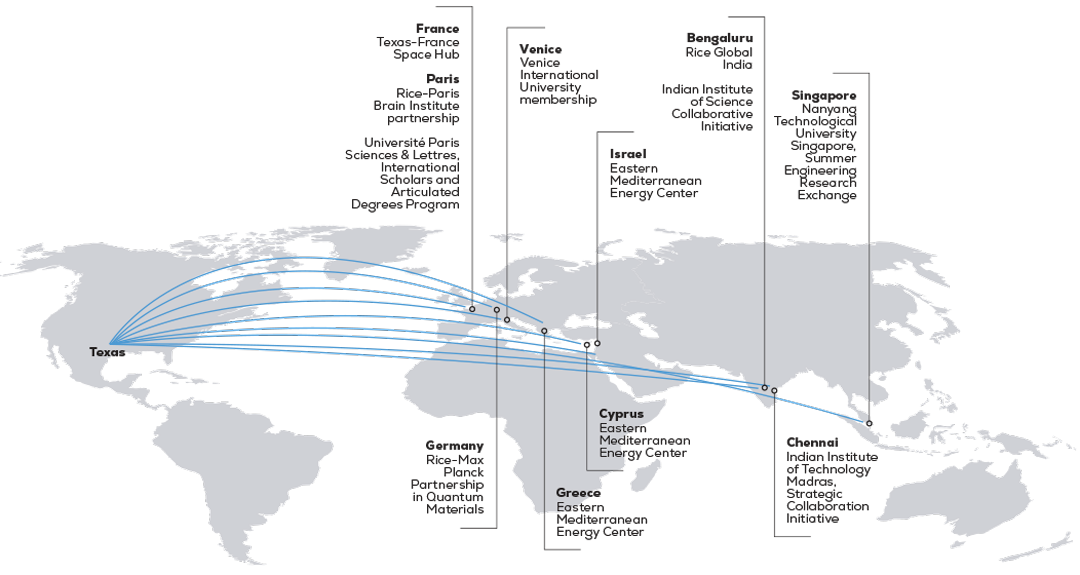
Since Momentous launched in 2024, Rice has expanded its global reach with over a dozen new partnerships across Europe, Asia, Latin America and the Middle East. These collaborations open doors for shared research, student exchange and big ideas — extending Rice’s influence abroad while bringing new perspectives, possibilities and connections back home to campus.
By the Numbers
-
51 new tenure-track faculty hires
-
9 working groups within the Sustainability Institute
-
45 grants awarded to faculty experimenting with responsible AI in the classroom
-
$257.9 million in sponsored research awards received during the 2026 fiscal year
-
37.5% year-over-year increase in sponsored research awards during the 2026 fiscal year
-
48% year-over-year increase in federal awards during the 2026 fiscal year
From the Fall 2026 issue of Rice Magazine